Black Dog

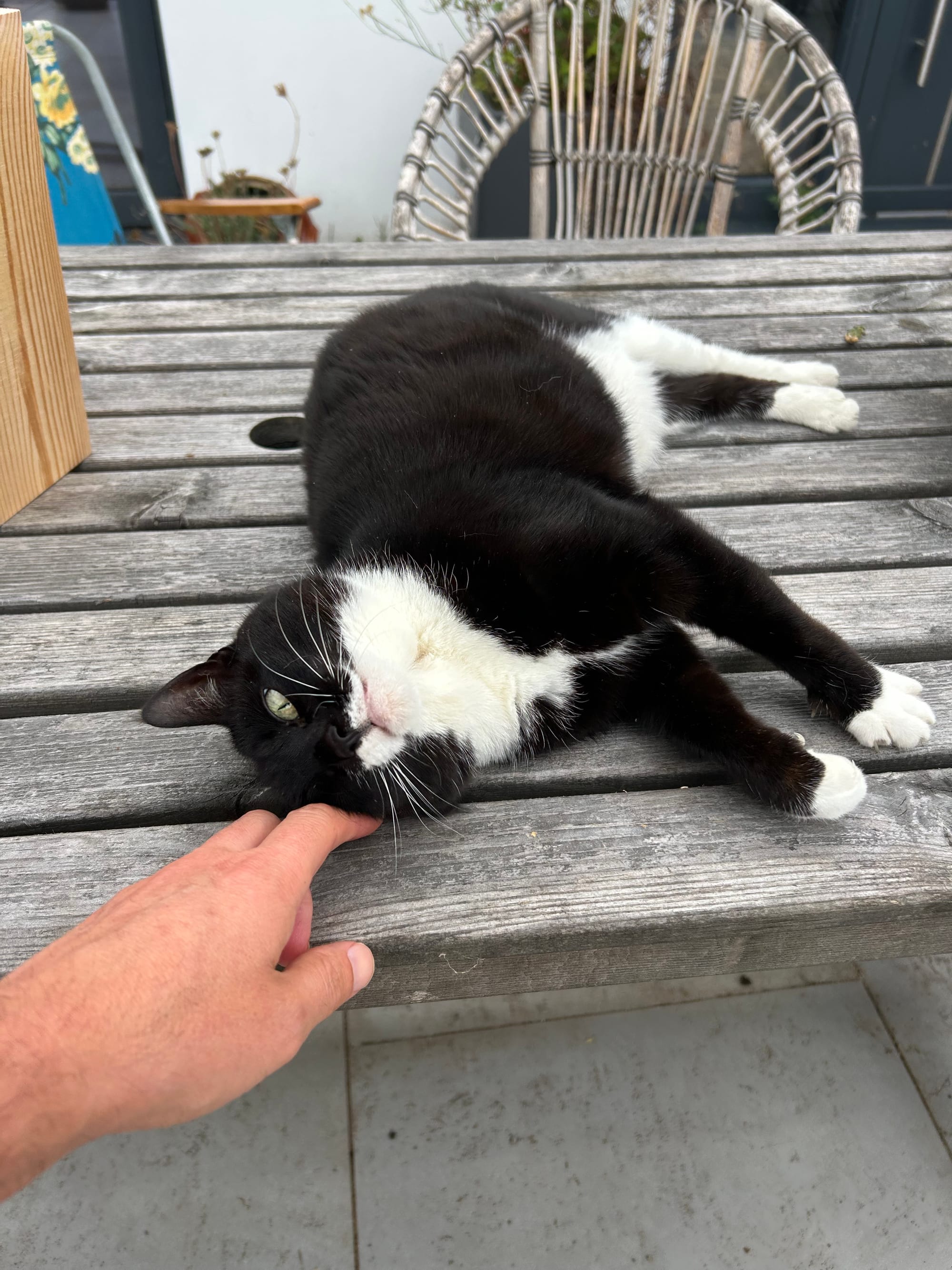
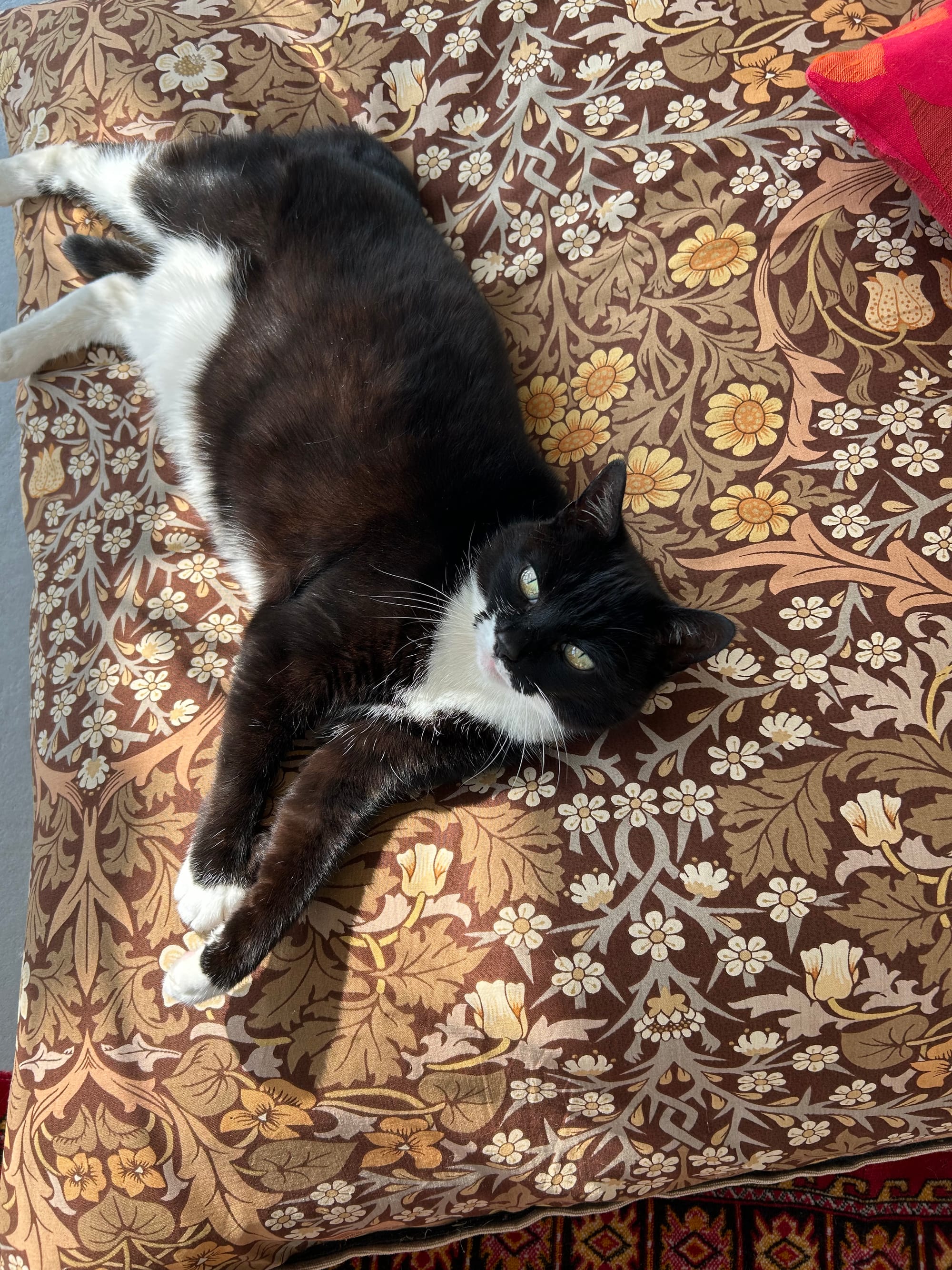
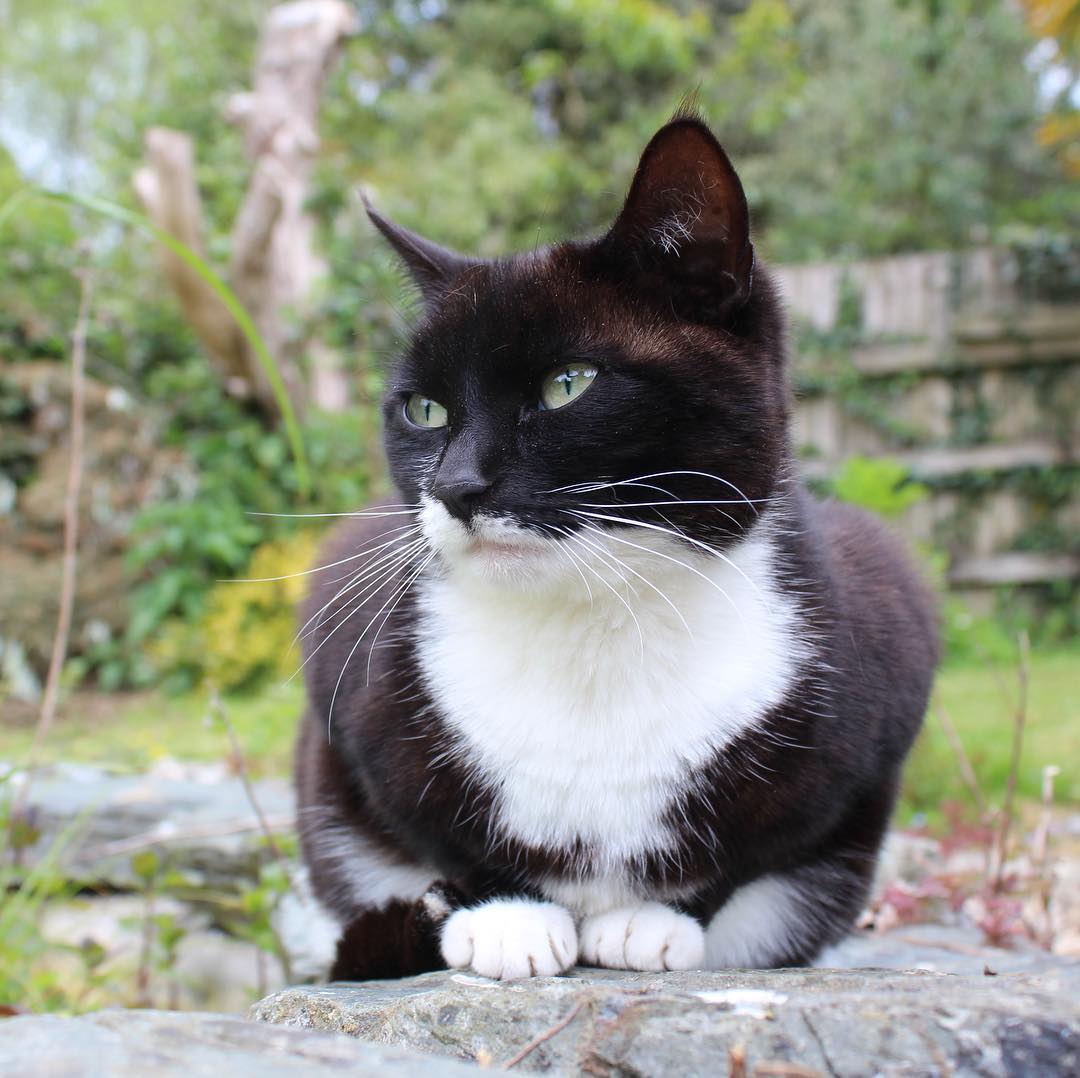
My cat Roscoe - who some of you might have been introduced to recently via her more vapid alter ego - turns 14 this month. She's a healthy cat, young for her age, which makes my mind boggle a bit as it hits me that precisely ten years ago I was nursing her back to health after she'd been savaged by a stranger's dog and narrowly made it through two lots of life-threatening surgery. The attack took place behind my garden in December 2015 and it was probably at this exact time in February the following year that I finally allowed myself to relax and believe that she was going to survive.
Here she is on her favourite William Morris cushion a few weeks ago. Doesn't she look great?
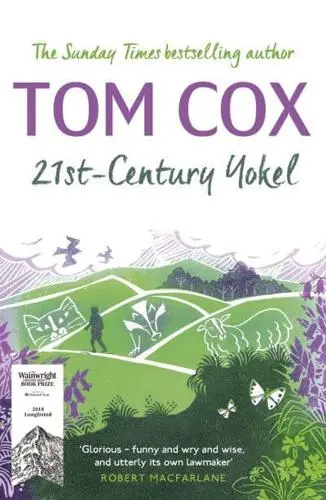
Anyway, in view of these two important anniversaries (she's still got six days until her actual birthday), I thought now was as good a time as any to post an excerpt from my book 21st-Century which concerns Roscoe, and her recovery. Actually, it's about a few other things as well, including the Black Dog legends of Dartmoor, and a much less threatening and demonic dog I formed a friendship with around the time of Roscoe almost being murdered. 21st-Century Yokel, if you don't know, was the first book where I broke away from traditional publishing and really did my own thing. Robert Macfarlane called it "funny, wry and wise, and utterly its own lawmaker". Unfortunately, due to the collapse of my ex-publishers Unbound, it went out of print for much of last year and the year before, but thankfully has recently been republished by Swift Press, and can be ordered here from Blackwell's with free international delivery.
I hope you enjoy this sample. As someone who'd never quite disobediently unleashed his full self on one of his own books before this, it was such an exciting thing to write, albeit sometimes difficult and emotionally painful too. P.S. This post is free to read for everyone but you can access all my new writing (and archive) with a paying subscription here or make a one-off donation here.
Fur and Sherbet
It was a thankless winter’s day, a nagging wind was shaking the last stalwart leaves from the trees, and I was trying to find some picture hooks so I could hang a couple of bits and bobs on the walls and make the place feel a bit warmer. I wasn’t having any success in the house so I decided to have a look in the garage instead. I hadn’t been in my garage for several weeks and, in opening its heavy up-and-over door, managed to disturb a sleeping cat. I’m not sure who was more surprised, me or the cat. We both did a little jump, and the cat escaped through a hole in the back wall. I hadn’t been aware that my garage had a hole in its back wall, nor that it had a cat living in it, and both these things made me think I should make an effort to get to know my garage better.
The cat was not one of the four who each sublet a room from me for a non-existent payment delivered on the first of every month but an enormous tabby stray who’d been hanging around in and near my garden for the last few months, spitting cusswords at my three male cats and periodically trying to mount the female one. Going on his tumble-dryer-soft fur and athletic good looks, I’d at first assumed that he was what those who know felines well tentatively call ‘owned’, but time had proved otherwise: none of my neighbours knew who he was and, as the weeks passed, his 3 a.m. meowing sessions outside my bedroom window had become more keening and forlorn. Despite a vertical white warpaint stripe on his nose he was almost approachable when I first met him, but, mistaking him for a spoilt thug, I’d chased him off a few times, waving the bill for the damage he’d caused to the nose of my own tabby, Ralph. Since then he’d become less sociable but no less ubiquitous.
You can live a relatively lavish life in summer and autumn in this somewhat utopian part of rural Devon if you’re a stray cat with a modicum of resourcefulness. After you’ve picked off one of the endless supply of unuspecting local rabbits you can wash its innards down with some fresh stream water then conk out for a few hours under a hibiscus while a person clad in sackcloth soothes you to sleep with their biweekly flute practice. But now it was early December. With the temperature dropping and the wind raging, I was glad my feline intruder had found a sheltered place to sleep among rusting golf clubs, old magazines and hardware.
Even at its worst, the wind in the South West never makes your eyes, cheeks and chin sting in that way a winter wind on Britain’s east coast will. That said, it had been blowing with the breath of a hundred-headed Celtic demon recently. Branches tapped furiously on my dark office window as I wrote, and the thick granite walls of my draughty single-glazed hilltop house seemed to be all that was stopping it from being whipped up from its foundations and blown over the valley towards Newton Abbot. In the midst of this cacophony, a small alien meow could have the effect of a tiny person sitting in your ear, playing one of history’s saddest melodies on the planet’s smallest harp.
On the morning that I opened my garage and discovered the stray cat – to whom I’d given the draft name of Uncle Fuckykins, because there was nobody around to stop me and, since he was unlikely to ever be mine, I probably wouldn’t be forced to live with the long- term ramifications – the wind was at its most heinous. It was the kind of undignifying wind that makes you hope that nobody you admire sees you while you are standing in it. Only a total idiot would spend any time in such a wind that wasn’t totally necessary. So, having left a bowl of food in the garage for Uncle Fuckykins, I got in the car, collected my friend’s dog and embarked on an eight-and-a-half-mile walk on a particularly exposed part of the moor. I’d read a bit about the section of the moor in question the night before in a nineteenth-century book. ‘This area is sometimes referred to as the Valley of the Thunderstorms,’ it announced. Brilliant! I thought. Let’s go.
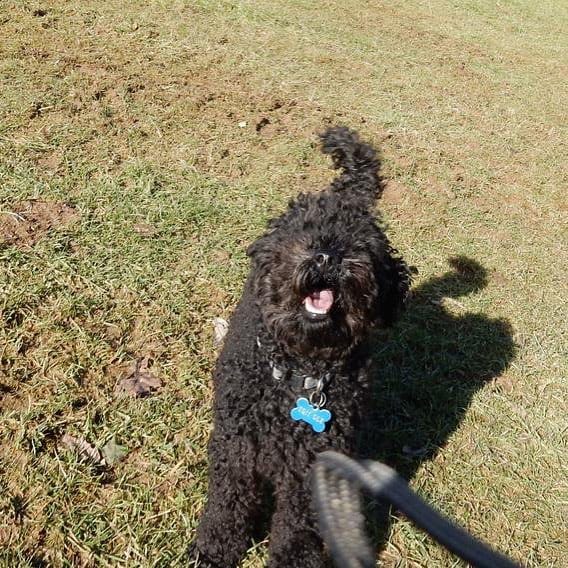
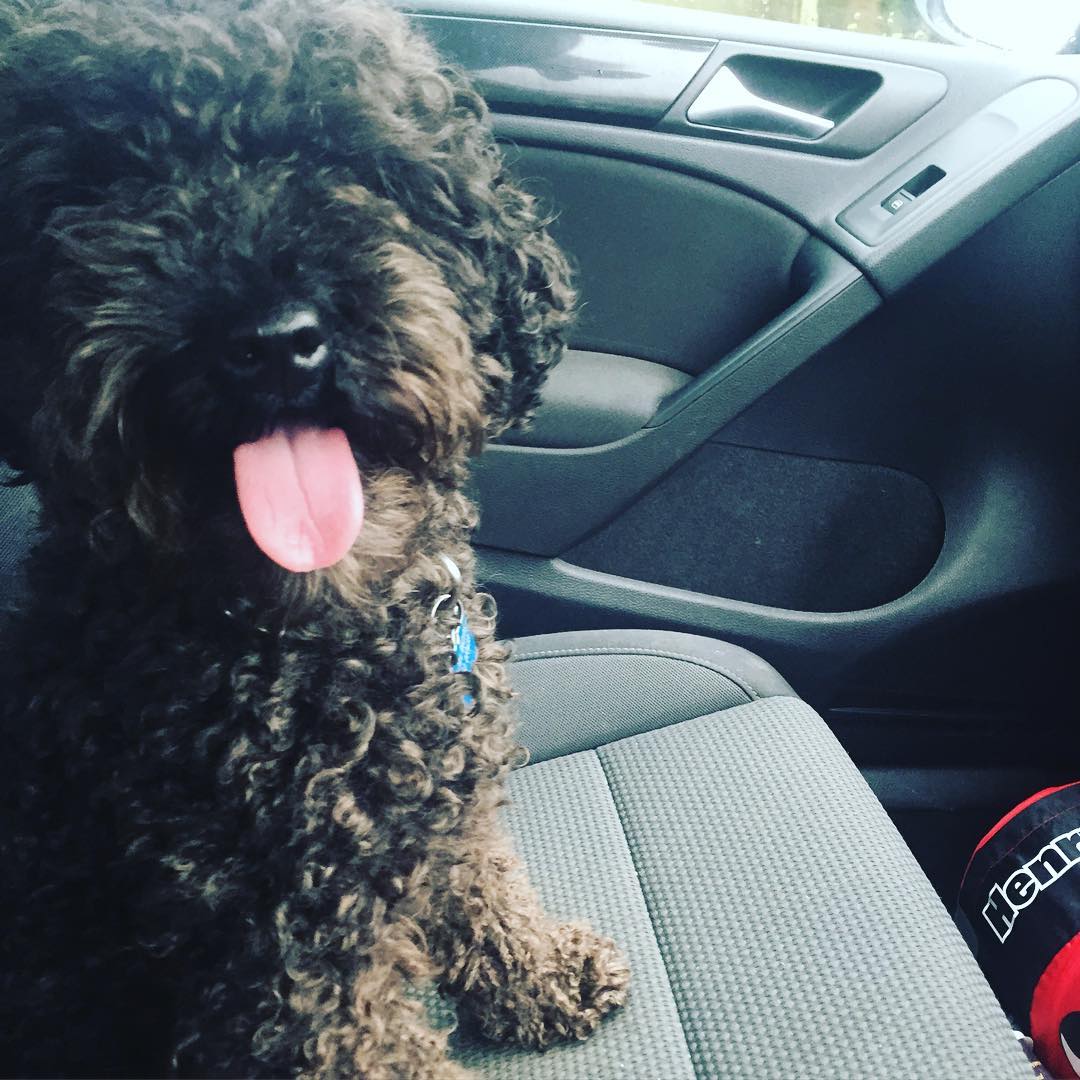
I had first met my friend’s dog, who is called Billy but sometimes referred to as the Blackberry due to his resemblance to a blackberry, a couple of years earlier on the Internet, which in our amazing modern world is now often the way that dogless men looking to borrow dogs and dogs looking to be borrowed find it convenient to meet. This had been made possible by a site called BorrowMyDoggy. It had taken me a little while to be totally comfortable about admitting I had met my part- time dog on the Internet, but I was OK with it now, and so was Billy. Of course others might have a problem when they found out how we got together, but in the end it was their problem, not ours. Back during the previous decade I’d borrowed dogs from people I had met in real life. There was Nouster, a proud birthday-card Border collie who lived with my landlord and who I’d walk around the two broads near my house in Norfolk. Then there was Henry, my neighbour’s cocker spaniel, who liked to roll around in pheasant carcasses and steal chips. But that was a different era and a different universe. Since then the lives of humans and dogs had become more virtual, and different ways to meet dogs had become more acceptable. Every Tuesday I picked Billy up from his owner Susie’s eighteenth-century cottage on the edge of the moor. Turning the back-door handle of the cottage was like a trigger that operated an invisible piece of elastic connected to Billy, who would twang towards me from wherever he was in the building, making a series of noises that shouldn’t by rights emerge from any animal not made out of rubber by a large corporation. Sometimes two more dogs were there with Billy. These belonged to Susie’s daughter Syd, and were older, dignified, sad-eyed hounds of great scruffy beauty, only unnerving to be around for the fact that – despite being unrelated by blood – they looked like tiny and massive versions of exactly the same dog. We’d quite like it if you walked us too, but we know you can’t, and we completely understand, the been-around-the-block eyes of the calm, wise scruffy dogs said as Billy pogoed the length of my body and yipped like a creature who was shortly about to explode from unalloyed joy and leave nothing but a small pile of fur and sherbet on the cottage’s irregular two-hundred-and- fifty-year-old flagstones.
It’s not that I wasn’t flattered by this yipping and squeaking, which could go on for up to a quarter of an hour. I did feel, however, that it was a little fawning and unearned. My cats curled up on my lap, played inspired paw piano on my chest and headbutted my knuckles affectionately, but that was the result of my willingness to make myself an annexe of their personalities, plus the years of research I’d done into their likes and dislikes: what food to buy them, when to stop buying it and purchase a more expensive kind instead, which knitwear to donate to them as bedding, where exactly behind their ears to scratch them and at what time of day. All I did with Billy was allow him to accompany me on long walks across moors and cliff tops. I’d have been doing the walks anyway, even if he didn’t come along, so it was honestly no big deal.
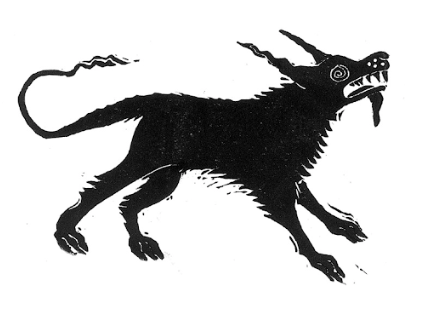
Dartmoor is the only place in Devon where the bite of the wind can almost match its east coast counterpart. As I climbed past the Nutcracker, a logan stone near Britain’s loneliest Christmas tree, to the summit of Rippon Tor, the breeze spun me in a quarter-circle and turned my hair into old, useless bindweed. Beside me Billy sulked slightly, having been put on his lead for the benefit of sixteen semi-wild cattle. Once we were over the brow of the tor I let him off and threw a stick to appease him. He fetched it then guarded it jealously from me in his customary fashion. I seldom put rotting wood between my teeth and had never given Billy any concrete reason to believe that I would steal one of his sticks, but even after knowing me a couple of years, he remained suspicious of my motives when he had one in his mouth. Billy is a black dog, an apt shade for Dartmoor, which is so full of demon hound legends they sometimes slosh over its sides, but ghoulishness is not really his area of expertise. A toy–miniature poodle cross, he is scarcely bigger than Uncle Fuckykins and possibly a degree smaller when his black curls are slicked down with upland rain. Susie had recently had a terrible infestation of rats, who’d chewed through the bathroom pipes and electrical cables in her cottage. A few weeks ago she’d gone into her kitchen and an especially big one had hurtled straight at her. ‘I jumped on a chair and screamed,’ she told me. ‘I was hoping Billy might come to my rescue but he just jumped on the chair with me and started screaming too.’
As my borrowed black dog and I turned west for Top Tor and Pil Tor, I mentally listed the dark and mysterious moorland legends he might inspire. The best I could come up with were the following:
- The dark and mysterious legend of how he ran after a cyclist on a path near Ivybridge but then got spooked by some rainbow-jumpered hippy kids listening to dubstep under some trees.
- The dark and mysterious legend of how he ran away from me and my birdwatcher friend Roy down a deep ravine near Venford Reservoir, yip- squeaking after seeing what he thought was a sheep, and didn’t come back for thirteen minutes.
- The dark and mysterious legend of how a post office receipt fell out of my wallet, and he ran off with it then barked and chewed it when I ran after him and asked for it back.
- The dark and mysterious legend of how he wove through the legs of three cows in a water meadow, like a tiny idiot.
- The dark and mysterious legend of how he ran after a black Labrador into a river then thought better of it.
- The dark and mysterious legend of how he got miffed with me when I dropped him off at home an hour earlier than usual.
Above us, further west, a celestial hole opened up in the clouds, shooting rays down over the ancient stone rows of Fernworthy Forest: as good a spot for a bucolic alien landing as there could be in England. In the valley below, just over a mile away, I spotted the unusually tall, damaged spire of Widecombe church and abandoned my route to turn half-right towards it, remembering the story Mike, a veteran member of the Dartmoor Search and Rescue Team, had told me about Jan Reynolds selling his soul to the Devil there in the autumn of 1638. One of the many commendable facets of selling your soul to the Devil in the seventeenth century was that you’d invariably have to go to a tract of bleak and windswept land to do it properly. Nowadays you can accomplish it far less romantically from the comfort of your own home just by running a corrupt property developing enterprise or writing a hateful column about immigrants or homosexuals for a tabloid newspaper. The Reynolds story is a West Country equivalent of Suffolk’s legend of Black Shuck and Blythburgh’s Cathedral of the Marshes, in which a real-life violent storm caused damage to the house of God and was blamed on demonic activity. In Widecombe the damage was not caused by a black dog, but by the Devil and his flying horse, who wrecked the church during their journey to claim the soul of Reynolds, a well-known local gambler and church-dodger. As Reynolds was carried off over Birch Tor, he dropped the playing cards he’d been holding, which allegedly left giant imprints on the moor in the shape of the symbols on the cards. Mike has been on the rescue team for a long time, but not long enough to have been actually involved in the attempt to rescue Reynolds from the Devil.
Widecombe-in-the-Moor is even more famous for the folk song ‘Widecombe Fair’, which is also equine-themed: a tale of a horse theft in the area, along with a list of people going to the fair in question. An argument could be made against the necessity of the list’s length. The early-music- influenced psychedelic folk band Renaissance and trippy displaced garage rockers the Nashville Teens both made the song their own in phantasmagorical ways in the early seventies, but the lyrics remain a bit like an old-time folk version of one of those tedious conversations you overhear on a train in which a cocksure young man is speaking into his mobile phone to another cocksure young man and listing all the people he has secured to join them for a night out (‘Tom Cobley’s confirmed now, and his grey mare – it’s going to be sick!’). Behind me where I sat and ate a plate of chips smeared with melted cheese in Widecombe’s extremely welcoming Rugglestone Inn were some original 1800s illustrations detailing events at the fair. These were enchanting, although conveyed a strong ambience of ‘several people taking advantage of the hubbub elsewhere by sneaking off to have sex with people they shouldn’t’.
While I ate my chips I read more about Widecombe in Sabine Baring-Gould’s collection of Dartmoor essays A Book About Dartmoor. It could be argued that the title of this is similarly overlong. A simple Dartmoor would have got the same point across adequately. Nonetheless, I decided to let that go at the time of purchase, as my local branch of Scope had been only asking £2.50 for it. Baring-Gould describes Widecombe as a village ‘walled off from the world’, but when I climbed one of these steep green walls twenty minutes later all I could see was that hole in the sky and beneath it heather, dead bracken, tussocky grass and large prehistoric boulders: a debatable definition of ‘world’ but one I was very comfortable with. There was room to imagine so much into existence here. Ascending Buckland Beacon beside a dog apparently made entirely out of knitting material, with that glowing crack in the clouds above and not another human in sight, it was not hard to look back and picture woolly rhino and mammoths trudging across the valley below.
I like to imagine that there was a time when all animals were woolly, not just rhinos and mammoths.
‘That snake over there looks exceptionally warm.’
‘Yes. That’s because it’s a woolly snake.’
The colour of the dusk as the walk ended reminded me of the dusk in An American Werewolf in London when David and Jack come down off the moor to visit the Slaughtered Lamb pub in East Proctor: smudgy granular purple-green. As a fourteen-year-old, I recorded some evening golf highlights on BBC2 and let the VHS tape run on so it also recorded the first thirty-five minutes of the film when Alex Cox showed it on the Moviedrome series. Over the next year I watched those thirty-five minutes more than a dozen times. When I finally saw the rest of the film, as an adult, I enjoyed it but felt slightly let down, particularly by its gory ending. I like my horror to be about the power of suggestion, not blood – another factor, quite probably, behind my love of Dartmoor. I amped up that power of suggestion on the way back by ignoring the classic American Werewolf advice to stick to the path, although this wasn’t the most swashbuckling move, as I remained thoroughly aware of where the path was the entire time. As a result, every bit of me up to shoulder height – and a few bits beyond – was mud- spattered, but that had been very much part of the plan at the day’s beginning. Where is the pleasure in being clean if you have never got dirty?
A lone set of headlights winked around Rippon Tor in the distance, and the temperature underwent a drop that felt like a small old cushion being pulled from beneath us. We’d done almost nine miles, my hip clicked, my calves ached, and Billy limped a little on his back left side. We jumped peaty puddles in unison as if tiredly choreographed. Multiple gorse perforations incurred on the climb to Buckland Beacon gave me shin burn. Half an hour earlier I had been stroking the head of a cheerful storybook sheep in daylight; now it was abruptly apparent that this upland was not just the setting for the unwritten ghost stories in my head, but a place where, if you were tired enough and cold enough and lost enough, you would probably not take long to perish. I was glad to reach the car, to drop Billy off and to fantasise about the hot bath I’d soon plunge into. I nagged myself into making a quick stop at the supermarket on the way home – partly for me, but primarily to get some food of a slightly better quality than normal for my cats, due to the stab of guilt I felt for feeding some of theirs to Uncle Fuckykins. If feeding him was to be a regular event, some prandial hierarchy needed to be imposed. While queuing to pay I checked my phone: there was a message from my dad, who’d found out I was walking today. ‘DON’T STAND ON TOP OF ANY CLIFFS IN THE WIND,’ he said. ‘AND WATCH OUT FOR FOOKWITS AND LOONIES!’ I returned the phone to my rucksack. ‘Surprising item on the bagging scale,’ said a robot a couple of aisles away, calm yet intrigued. In front of me at the human checkout a woman was purchasing a jet-black eel, wrapped in cling film. I was not aware that any supermarket fish counter sold a creature of such size. It was longer than my arm and probably thicker. I felt very unadventurous with my blueberries, crisps and chicken slices.
‘Wow!’ said the checkout operator to the woman with the eel. ‘Is it the cat’s birthday?’
‘No,’ replied the woman.
Terrorist Canoes
That night, after devouring several of the chicken slices, my female cat Roscoe slept on my bed, burrowing purposefully into my side. She’d been doing this a lot since the arrival of Uncle Fuckykins: a period when she’d become a noticeably more clingy indoor being and a noticeably more distant outdoor one. On our way back home to Norfolk in spring 2012, after picking up our new kitten from west London, my girlfriend and I listened to the song ‘Roscoe’ by the bucolic, 1800s obsessed rock band Midlake. We decided to name the kitten in honour of it. It also seemed vaguely fitting: early signs suggested that the kitten, who had the appearance of a cartoon masked feline supervillain, boasted a scrappy tomboy character, and, having adopted a couple of male cats with female names in the past, it seemed only fair for me to even the score. But it had turned out to be more apt than I could have ever imagined. In the song, Midlake talk about what a ‘productive’ name Roscoe is, and Roscoe soon turned into the most industrious of cats: an animal who, when not asleep, had a permanently businesslike air about her, always seemingly involved in some important hedgerow admin or undergrowth-based clerical work. When I was lucky enough to be greeted by her in the garden, her white paws gave the impression that I was talking to someone very industrious who wore running shoes in order to move more quickly to and from meetings. When in the house, during periods when my clothes were drying on radiators, she would go around the upstairs rooms, efficiently pulling each item onto the floor with her stretched-out paws until she found a garment that she deemed sufficiently comfortable to sleep on.
The first six months of our new life in Devon had been a tough time for Roscoe. A dumb, sunny, ginger stray called George, who I took pity on, divesting him of his testicles through a third party and allowing him to live with us, made it his devout mission to dry-hump her at every available opportunity. Horrified, Roscoe – renowned in the past for her take-no-shit attitude with male cats almost twice her size – began to make a series of uncharacteristic escapes. I knew matters had reached crisis point when, one day outside the local pub, my girlfriend and I saw her sitting at one of the other tables, ignoring us and socialising with some rough- looking strangers. George was shipped off to live a life of room-service bliss with my parents that autumn, and a ten-month period followed in which Roscoe really got back on top of her work, cuffing my much larger male cat Shipley into line, crunching on mouse skulls in a practical, unshowy way and patrolling the perimeters of the garden in a manner that couldn’t have looked more systematic and industrious if she’d had a tiny carpenter’s pencil behind her ear. But since the beginning of the reign of Uncle Fuckykins she’d been nervous and unsettled – even more so perhaps than when George lived here. The only room she was any longer comfortable in was my bedroom. She now appeared to have two modes: asleep next to me or as far from home as possible. Returning from a party on Halloween, I’d been startled to hear a familiar meow behind me on the river path over a mile from my front door and turned to see her scuttling out of the bushes in pursuit of me. Roscoe had always had an unmistakable, panicky sort of meow, which seemed to have never quite fully developed. Here, so far from her usual territory, near main roads and Devonshire techno hippies, the meow seemed doubly insufficient. Shaken to see her in this foreign area, I picked her up, held her tight inside my coat and walked her back to my house, moving off the lane a couple of times to hide in the undergrowth when Halloween revellers came the other way, lest she freak out and escape back towards town.
Something had to be done. But what? Uncle Fuckykins had become just the wrong combination of elusive and ubiquitous: I could no longer get near him, yet he was always around. Ralph, the most alpha of my cats, had chased off other intruders in the past, but he was in early old age now and knew better than to mess with a young hooligan, particularly after that nose injury. As he and I sat on the porch step one day and watched Uncle Fuckykins nonchalantly cleaning a paw beside the garden gate, a sense of helplessness set in, as if all that was left to do was for one of us to call the police. Twice in the four days after my walk on the moor with Billy I had heard Roscoe’s anguished alarm cry in the bushes behind the house and found her pinned against walls and fences by the marauding Fuckykins. As she ate, she looked nervously over her shoulder in the direction of the back door, before retreating to my room for periods of up to thirteen hours.
The following morning I was in the living room cleaning up the spleen of a vole killed by Ralph when I heard the bang of the cat flap and saw Roscoe hurry past me and up the stairs. Like many of us, Roscoe yo-yos in weight between the seasons: she’s svelte in summer, but in winter takes on the appearance of a black and white bowling skittle, waddling a touch when she picks up speed. But she was moving more awkwardly than usual and I noticed she was drenched, which was odd as, although the ground was wet, it hadn’t rained for several hours. I deposited the vole’s spleen outside, where it would be soon devoured by jackdaws, and went upstairs, where I found Roscoe beneath the bed in the spare room. I did not look at the large wound on her left side for long, but what I saw was enough to propel me to the cupboard where I stored a couple of large plastic cat carriers, bundle her into one of them and drive to the vets’ as fast as possible. In the surgery a junior vet shone a torch into the gash, which I now realised was extremely deep. Roscoe appeared calm, but the junior vet asked me to leave her at the surgery so one of the senior members of the practice could investigate whether there’d been any damage caused to her abdominal wall. Further investigation revealed two more wounds, closer to her tail.
Returning home, I blamed myself. By not acting decisively and trapping Uncle Fuckykins, I had permitted this to happen. I stamped out furiously to the garage, where I found that both of the bowls of food I’d put out were empty, but there was no Fuckykins. Just over an hour later, one of the senior vets at the surgery, Trevor, called. Roscoe’s abdominal wall had been severely damaged, and an operation would be needed to repair it. When I told him about Uncle Fuckykins, he sounded doubtful. ‘The main wound has all the hallmarks of a bite, probably by a large dog,’ he said. ‘I don’t think even a very big cat could have caused this much damage.’ As Trevor said these words, a memory – strangely repressed until now – returned: me waking that morning to the thump of fast, heavy footsteps and a man’s impotent, frantic voice behind my garden hedge. ‘Oscar! Oscar!’ the man had been shouting breathlessly. The meadow beside my house is one where dogs are not permitted, let alone permitted to roam off the lead: an instruction very clearly signposted. I had not connected the two events before but now they seemed too much of a coincidence: the extent of the injury, the wet fur. My undersized, sweet cat had been dragged through the grass in the jaws of a dog belonging to an irresponsible owner. An irresponsible owner too cowardly to come forward and admit what his dog had done. A hit-and-run. How on earth could I find him? I didn’t even know what he looked like. And what if I did? How could I prove what his dog had done?
The following day I waited for the results of Roscoe’s surgery in a state of total helplessness. Going into the spare room for the first time since I’d taken her to the vet, I saw what I’d not had time to see before: a large bloodstain on the bedding, where she had clearly sat before retreating under the bed. My clothes dried on the radiators in the other upstairs rooms, unvandalised. I set off down towards the river and walked a few miles through the countryside, not knowing what else to do. Late in the afternoon I received a call to say Roscoe had made it through the surgery and was just coming round from the anaesthetic. Now it was a matter of waiting to see if the operation had been a success.
There was one decisive thing I could do while I waited. If Roscoe was going to recover and return home, I wanted to ensure her life was as stress-free as possible when she did. After a few phone enquiries, I drove to Newton Abbot and borrowed a metal cat trap from a lady who worked for Cats Protection. A couple of days later, using some of the brand of cat food I think of as Posh But Stinky, I managed to lure a frantically meowing Uncle Fuckykins into this knee-high prison and transport him to the vets’. Up close he was even more impressive: two thirds tabby, one third tiger. I had never met a more solidly built cat. Upon seeing him, even Sarah, one of the receptionists at the vets’, who saw hundreds of cats over the course of the year, was visibly taken aback. In the examining room Fuckykins jumped on my lap and the nurse ran a scanner over him. No price flashed up for him as she did, but I sensed that, if it had, it would have been extortionate. The surprising news that came back from the scan was that his home was eight miles away, in the seaside town of Paignton.
‘He’s called Mittens,’ announced the nurse.
‘You’re kidding,’ I said.
‘Nope. Well, that was his original name, and what we have him down as. But he went to live with a neighbour, and she renamed him Mogs. He’s been missing since May. She’s had posters up all over the neighbourhood and had just about given up hope.’
Uncle Fuckmittens, as I had now already begun to think of him, was of course by no means unusual in being apparently quite young yet already having had several names. That happened a lot with cats, I found, even when the cat didn’t get passed between multiple humans. Cat names have a tendency to evolve like avant-garde jazz. It is unlikely that, by the time of its fifth birthday, the name by which a cat is most regularly known will have any resemblance to its original name. The proud white cat I lived with during my adolescence was called Monty, which begat Ponsenby, which begat the Ponce, which begat Pompous Cat, which begat the Pompidou Centre. Similarly, Roscoe, who was still only three, had become Rosc, then Roscins, then Ruskin, and had often recently been addressed as Anglia Ruskin College. I’m sure Fuckmittens would not have remained Uncle Fuckykins had I adopted him, and I had to admit, as I listened to his traction-engine purr and he padded my thighs, as if trying to extract seven months of missing love from them, I did briefly picture a scenario in which I had and fantasised about some of the new names that might emerge from such a union. It was pure fantasy now, though. He would be incarcerated here for the night before his original owner came to collect him, then, unless he regained his wanderlust, I would never see him again. Thoughtfully, Steph the nurse housed him on the opposite side of the building to Roscoe, who was in no state to be reunited with her former tormentor, even in a purely aural and olfactory fashion.
After I’d said bye to Fuckmittens, I was taken by Steph to say hello to Roscoe in the cage where she was recovering. I’d prepared myself to be shocked by her state, so my shock at seeing the mess her side and rear were in, no longer protected by all that fur, was a fortified kind of shock, but it was still shock. Steph told me the vets were happy with her recovery so far, and I might even be able to take her home in a couple of days. As if to confirm this, a druggy-eyed Roscoe staggered over to me and nutted my knuckle like a loving but essentially violent wino. Two days later, armed with a bag full of cooked chicken slices and a small hospital’s worth of medication, I transported her back home, the two drains the vet had placed in her side to take the fluids from her wound still present. I was glad and slightly amazed to have her back in the house, but something didn’t feel right. She still seemed like a very ill cat and overnight refused the food I put out for her, sitting plaintively inert beneath the chest of drawers in my bedroom. In the morning I took her back to the surgery, and another vet, Dermot, found that her temperature was very high and the infection had re-entered her abdomen. She would need a repeat operation, and it would be expensive, costing significantly more money than I had in my bank account. Was I sure I wanted to go ahead? Of course I was sure. I would find a way to cover the cost, no matter what it meant for my own future.
What do you do while you are waiting for a phone call to tell you whether an operation to save your cat’s life has been successful? I certainly wasn’t going to get any work done, so, as before, I walked. It was no sane weather to be out on Dartmoor, but going there felt like the right thing to do. I plotted a route hastily on an OS map still dog-eared and a little soggy from my last walk: six and a half miles, rising steeply from the flat land, past the appealingly named village of Owley, then around the back of the desolate expanse of Ugborough Beacon, returning over its peak. A short hike by my standards, but by no means an easy one.
I entered the edgelands of the moor via one of its most Gothic gateways, beneath the tall Victorian railway arches supporting the London-to-Plymouth line. By my reckoning, by the time I returned the surgery would be finished, and the vet would be due to call. Ahead of me the Beacon was hidden in plumes of occult-looking cloud. Gloopy churned mud slowed my progress, arable winter Devon encapsulated in each footstep. I looked forward to getting onto the high part of the moor, which though much wetter would have better drainage that would make the going easier underfoot.
My phone rang when I was barely halfway to the summit, before I reached the part of the moor where the signal provided by the network became merely a figment of a new planet’s imagination. Dermot the vet was on the other end of the line. He was part-way through surgery and wanted to tell me that the infection from the dog bite and the resulting internal damage was even worse than he’d suspected. He felt it best to warn me now, due to the risks involved and the even greater expense. I listened carefully, learning even more about the inside of Roscoe than I had already since last Monday, which was a lot. As I heard about all the damage done to my small sweet cat by the large jaws of a dog let off its lead by a thoughtless owner in a place where it wasn’t permitted to be, the rain rat-a-tatted more heavily on my anorak. The two largest segments of darkness in the sky looked like a pair of bullies edging in on what pathetic slither of daylight there was. I looked up towards the moor, two fat droplets of rain ran down my cheeks and I felt like I was in a film scene put together solely to labour the point of what a relentless, remorseless monster winter can be.
I am someone who sometimes struggles with the lack of light in winter, and the more rural you get, the more that lack of light can overwhelm the senses. For many people the tough time is January and February. I can see why: January can feel like fumbling about for comfort in a big unlit hall and feeling only bones, and February tends to come across as an unnecessary extra encore that winter does to please its hardcore fans. But for me it’s always December that’s been toughest: that sensation, growing more acute as the solstice approaches, of nature locking itself up, of each day being a narrowing wedge carved out of cold black slabs of nothing. This is why we invented Christmas, but Christmas has its limitations as an anti-depressant. I am fond enough of the day itself but am not a fan of forced jollity or environmentally harmful gluttony, which doesn’t make me especially well disposed to the build-up to it. Once New Year arrives my spirits begin to turn gradually in a better direction, all the way to April and May, by which point I’m so giddy in the sweet humming air that I want to climb every tree and kiss every bumblebee I lay eyes upon. I’ve been the same all my adult life, although it took me a while to properly recognise it. I was perhaps more aware than ever of the darkness approaching this year, more conscious of my need to look after myself at the end of a tough year. I’d not been doing too badly until Roscoe was attacked, but the incident spun and tumbled into my recent past and knocked loose a few other bits of pain that I’d tightened up. It is at times like this that you realise just how precarious you are in the depth of winter. What if several other awful incidents happened too? Who was to say they wouldn’t? How do people survive through that?
At the end of autumn when these dark wet days were first flexing their limbs I’d visited a pub on Dartmoor with a friend and, apropos of nothing, a man had inflicted upon us an offensive impromptu lecture about the UK’s current terrorist threat. We listened to his tiny misinformed viewpoint about the Muslim faith and what he repeatedly referred to as his ‘Christian Country’ and did our best to change the subject, realising that saying what we actually thought – that he was a dicksplash of medium-large proportions, for instance – would change nothing for the better. I wondered what had made the man obsess about Muslim terrorists on one of the highest parts of the South West Peninsula, surrounded almost entirely by sheep, ponies and moss. Was it those Muslim terrorists you often witnessed sitting about looking shifty in the Bronze Age hut circles at Grimspound, plotting the downfall of Western civilisation? Or perhaps it was the Muslim terrorists you constantly saw paddling down the River Dart these days, in their terrorist canoes, from the river’s hard-to-locate source at Cranmere Pool? It was clear that it was the man’s very insulation and separation from terrorist attacks that had made him so irrational and fearful. I could not relate specifically to this, but I could in the sole sense that I do often fear winter more irrationally when I’m slightly insulated from it. When I’m at home, protected from winter by a roof and central heating, it seems much more frightening, plays on my mind far more malevolently. This is part of why my method of conquering it is to face it head on. I walk through its gaping jaws, voluntarily, spontaneously, when I should be doing other stuff. When I do, the rain and wind somehow don’t seem as scary as they do when they’re hammering on my bedroom window at night.
Some might argue that today I had chosen to look winter a little too squarely in the face. Leaving farmland behind and approaching the Beacon, what I saw ahead of me was a dreary, drenched otherwordly landscape of gradually fading visibility. This was by no means the highest, most remote bit of Dartmoor, but when hard- bitten veterans of the national park told me that there was a certain kind of weather you shouldn’t be out on your own up here in without an experienced companion and a compass, the scene ahead of me was pretty much what they were talking about. I knew that visibility would only reduce as I climbed, and the already somewhat nebulous paths would become less defined still. You couldn’t even call the moisture whipping diagonal lines across my face rain any more; I was walking through the middle of that occult cloud I’d seen earlier. It turned out it was even more occult when you were inside it. In three miles I had not yet seen another human, but ahead of me I spotted two black dogs near a dead tree. Before I got closer and made them out for what they actually were – sheep – my heart skipped a beat; not because I believed they were the Devil’s wisht hounds of Dartmoor legend, but because since the attack on Roscoe the sight of any dog had triggered a new unease in me. I could easily have brought Billy out with me today but had chosen not to. With every step of the way I felt more helpless, more angry towards the owner of the dog who’d mauled Roscoe, whose guilt – unless his conscience got the better of him – I would never be able to prove. I hated to think of Roscoe alone, in pain, not knowing why she was where she was. As I pressed on through the mist I was gripped by the conviction that I was walking purely for her. Yes, it might be safer for me to turn back in view of the weather, but this was not about me.
TV’s ALF
With each step the cloud around me was getting thicker. Another even more indomitable wisht hound moved across the path ahead of me: a horse this time. That’s if it was still the path? At this stage I had only the trickle of water running down it as a guide. I was aiming for Squirrel Cross, surely one of the most sarcastic names on the moor, since there could be few less squirrely places in rural Britain than this. I gave thanks for the compass my parents had bought me last Christmas to aid my moorland walks. That brilliant useful compass, sitting back on my desk at home. The cross loomed out of the gloom like an alien totem: half a cross, really, at best, with a worn stone face that reminded me partly of Zardoz, partly, incongruously, of TV’s ALF. Four paths diverged from the cross and I took the first left-hand one, at a slight diagonal. After less than a minute the path vanished. For the next mile I used some kind of path instinct that’s probably very primal but also tied to a trust that had perhaps grown out of seven years of completing at least one rural walk per week. I could not have definitively said what I was on was ‘footpath’, only said that what surrounded it was fairly definitively ‘not footpath’. Prehistoric bird shapes swooped in the gloom ahead and a medium gale shrieked its character assassination in my ear.
I’d seen the Beacon scowling at me so many times, dominating the landscape and the A38 between South Brent and Ivybridge, but I’d never imagined it could be this otherworldly and ominous on top, like that one planet people talk about in a sci-fi film which nobody actually goes to because it’s nearly devoid of life. The path began to go downhill, a sign that I would be out of here soon. I was surprised to feel a marginal tickle of relief. Earlier I’d had the passing, accepting thought that it wouldn’t be such a bad place to die, Ugborough Beacon. But in this lower-altitude spot the mist cleared and the turf around me widened out into what looked oddly like a golf fairway. This was because what I was on was a golf fairway. I knew the golf course. I planned to play it in a couple of months, in another bout of self-punishment. I was almost back. I still had not seen another human.
I drove home, opened my front door, instantly peeled off most of my sodden clothes. Other clothes – clean, warm – hung on radiators, still unvandalised. The phone rang. It was Dermot. Roscoe had woken up from her anaesthetic. He’d done his best for her and she seemed reasonably bright, but there was a long way to go and only the coming days, again, would reveal if the operation had truly been a success. I had been on walks of at least four miles every day since her accident. I remembered the toothache and backache I’d been suffering from for the last fortnight – mysteriously absent for just a few hours but now back with interest. I ran a hot bath, thinking that it was time to rest for a day or two, and also of all the work I had been postponing.
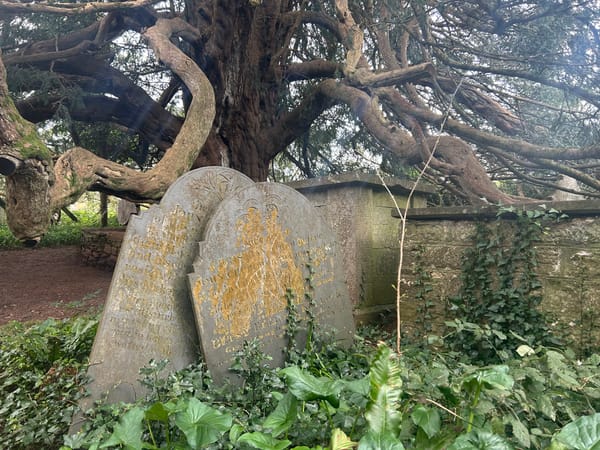
Early the next morning though I set off again, through long narrow crevices in the hills a few miles from my house: red earth paths and water lanes where you could be quiet and alone. Places where silence has a different kind of depth. I knew where I was going, which was to the village of Stoke Gabriel, but it was only when I got to the churchyard in the centre of the village that I realised why I had truly gone there. Beside the lychgate at the entrance to the churchyard stands a yew tree estimated to be a thousand years old. Its gnarly limbs, some of them held up by wooden struts, twist down around and on top of gravestones, attempting to re-root, as yews tend to, given enough time. In the places where the exterior bark has flaked off, the underlayer is the colour of dried blood. It’s a tree of glorious, wise chaos, associated, like all yews, in folklore with everlasting life or at least longevity. I had a couple of much much younger yews in my garden beneath which my oldest cat, The Bear, loved to sleep. The Bear was approaching twenty-one now and almost entirely deaf. I’d become properly aware of the severity of his impaired hearing the previous August when I was sorting myself some cheese on toast and set my kitchen smoke alarm off, causing the other three cats to scatter but The Bear to merely sit at my feet, looking up at me in a way that seemed to say, ‘Hello! Erm, did someone call?’ I’d felt he was slowing down before my move to Devon, becoming more of an indoor cat, but since being here he’d loved to be outdoors again, and our two years here so far had seemed like a miraculous extension of his long life, during which rain, clear air and sun appeared to be performing a natural spa treatment on his brittle old body. Beneath the yew, he fell into inordinately deep sleeps and woke from them wide-eyed, as if freshly amazed at the grass and trees and hilltop air. I sometimes told myself the yews had a hand in the fact that he was still with me. They’d been associated with all sorts of magic in the past after all, some of it unexplained, some of it debunked. Until the 1800s their branches were laid in coffins and graves for good luck. In the churchyard at Painswick in Gloucestershire during the first half of the twentieth century nobody could understand why there were always ninety-nine small, clipped yews, and any time a hundredth was planted, it would die, until in the 1960s it was revealed that a local scientist was sneaking into the graveyard and repeatedly poisioning the hundredth yew after it was planted. Fanciful non-pragmatic people like me like to think that the reasons yews are often found in churchyards might relate to some kind of earlier pagan, Druidic activity, but there is no historical evidence to substantiate this. Of course the contradiction of yews is that their sap is extremely poisonous; they are killers who double as dark green saints of life.
Local legend states that if you walk backwards around the yew in Stoke Gabriel churchyard seven times without stumbling ‘one true wish will come to thee’. It’s the kind of thing I might not have done alone when I was younger, for fear of looking silly in front of a potential passing stranger, but I cared less about looking silly these days, and about who saw me doing it. With the ground bumpy and the late-afternoon, end-of-year light gloopy, the avoiding-the- stumbling bit was surprisingly tricky – especially if, like me, you’d swiftly downed a pint of ale immediately beforehand, at the Church House Inn next door, which was built in 1183, and in whose walls during renovations a few years ago a three-century-old mummified cat was discovered. After I’d completed the seven circuits I decided not to speak or think my wish, being of the opinion that the yew tree, or its supernatural guardian, would be wise and intuitive enough to know, and would feel patronised by having it spelled out in neon. I walked the seven miles home frontway around, aching, with night chasing me all the way. I called Dermot the vet again when I arrived. Roscoe was eating well, her temperature down a little. She was still very sore and weak, but with luck she might be home by Christmas, which was now just six days away.
In a way a vet giving you an estimate on rebuilding part of your cat is a little bit like a builder giving you a quote on renovating your house. A vet can have a good look around your cat, let you know a rough idea of how much your cat might cost to repair, but the vet can never be definite and can’t really predict how costs might escalate when the structural composition of your cat is properly investigated. Roscoe’s intestines had already been threaded back inside her body and large amounts of muscle tissue cut away. In the second operation more muscle tissue still was cut away. ‘There isn’t a lot left to work with if we have to operate again,’ Dermot’s colleague Trevor admitted to me. I had been hesitant about saying anything about Roscoe on the Internet, but I did decide to write something, as she had been a big part of my last two books, and I was aware that lots of my readers felt like they knew her and would want to know how she was faring. Soon after I uploaded my piece I received a message from a stranger who told me that, if Roscoe was to recover, she should on no account be permitted to go outside again. I wondered if the stranger had a rabbit who had got ill from eating cheese and whether I should write to the stranger, at her postal address in the middle of America, with a written warning that I would not allow her rabbit to eat cheese again. But at the same time a miraculous gesture of love occurred: an example of the way the Internet can unnerve you by being dark and weird then instantly show the astonishing kindness of people. Unprompted, several of my readers clubbed together to create a fund for Roscoe’s surgery. More readers of the two books featuring Roscoe found out about it and the fund grew. Without it the following few months would undoubtedly have been very difficult for me to survive financially.
As a teenager, the people I most admired were first professional sportsmen, then, as I hit my twenties, they were replaced by musicians and comedians and novelists. Nowadays, the people I most admire tend to work in the medical professions, often for pitifully little money. This feeling was reinforced following the attack on Roscoe. I was aware not all veterinary clinics were as conscientious and kind as my local one and felt blessed to live near it. Another good thing about the clinic was that it was based in the same building as a local brewery, which had a pop- up bar. I did not quite turn to drink during my visits to check on my sick cat, but it was comforting to know the option was available close at hand.
In the fortnight that Roscoe spent in this warm and caring cat hospital the vets and nurses got to know her stubborn yet affectionate character, and became a little more attached to her than they did to the cats who passed through the place more briefly. They became familiar with her passionate headbutts and the special low rumble she made from her nose when she was being especially stubborn. Steph the nurse admitted that, after their works Christmas drinks get-together on the 22nd, a group of the surgery’s employees had sneaked off back to the surgery purely to say hello to Roscoe. She had always been by far the most independent of my cats, and I had often taken the view that she was ‘usually off happily doing her own thing’, but I was surprised how keenly I felt her absence in the house: the little spaces she occupied so resolutely. The way, despite being barely more than half his size, she would smack Shipley in the face with a karate paw when he stepped out of line, and quite often when he didn’t. Her low-key love affair with The Bear, which was sometimes expressed on her part by sleeping on his back. Her tendency to walk on her hind legs when she was particularly elated or hungry and wave her paws around as if celebrating a strike in a tiny cat bowling alley. Her unfathomable obsession with damp towels. Her habit of burrowing into my side as I slept, then, when I moved away to try to get more comfortable, doggedly pursuing me to the other side of the bed and burrowing into my side even more forcefully – once even to the extent that I fell off the mattress. I missed all this keenly and clung to the hope offered by her headbutts when I visited her: the hope that it would all happen again.
37 Boobs
On Christmas Eve Dermot the vet called and said Roscoe could come home for a trial period. I had not expected such a privilege yet. Dermot said that although the infection seemed to be clear and the surgical drains in Roscoe’s skin had now been removed, there had been a major breakdown of tissue around one of her bigger wounds. I was warned by both him and the nurse who handed Roscoe over that with the stitches out the wound looked ‘very gory and gruesome’, but they assured me they were happy with the way it was healing. It was not until I got home with Roscoe that I properly had the chance to inspect it, and I was instantly convinced that she had sustained an extra, life-threatening injury in the ten minutes we’d been in the car. It was so much worse than I’d expected: a deep, gouging hole into her interior. I was supposed to rub manuka honey and gel into this hole several times a day. Surely, if I did, I would injure her further? On Boxing Day, when I took Roscoe back to see Trevor, he said he was pleased with the way she was healing. She was healing? The last time I saw something like this, I had been watching a Wes Craven film.
Here, then, was my festive period, 2015: finding stealthy ways to con Roscoe into taking four antibiotics a day, squirting a carefully measured quantity of painkiller over her meals, rubbing ointment into her wounds, getting out – but not for very long – for walks, sitting in her room (which had previously been my office) and watching her wobble over to me – a little more steadily each day – look into my eyes and let out a piercing, bargaining meow. Taking pity on her, I let her sleep on my bed, even though the wound left unsightly stains on the duvet cover. I watched as she stretched herself along the bottom of the radiator and pressed the wound against it, and I worried she would glue herself to it with her own blood. When she moved, the wound made a wet, unpleasant noise. As if in sympathy, I burned myself, sustaining a painful wound of my own – though no doubt not half as painful as Roscoe’s – and got ill in a couple of other minor ways. This wasn’t ideal, but at least it imbued our time of incarceration together with an extra feeling of solidarity. We went through another honeymoon period: she looked at me in a different way to how she had done before her accident, chatted to me more, appeared to want me for more than my cooked chicken slices and damp towels.
She returned to the vet’s, again, three more times, and they told me the wound had shrunk, but I could not quite convince myself it was true. As other cats in the waiting room let out their eclectic meows – stuttering meows, guttural meows, yob meows, spoilt-boarding- school meows, meows that sounded like Morrissey might, if Morrissey meowed – Roscoe remained silent and newly philosophical. Shush your whining, her cartoon button eyes, viewed from between the bars of her wicker prison, seemed to say. You don’t know what hardship is. I freakin’ live here. On her final visit she was shown off by Dermot to the whole team, like a rosette that, while technically only attached to one individual, was ultimately for everyone. By this point she had already been showing a new brightness: tumbling across the living-room floor after a catnip mouse, dancing out of my office on her hind legs when I opened the door in the morning, ready to greet the day head on. But it was only a few days after she’d been signed off by Dermot for the final time, antibiotic-free, that I looked at the main wound and let myself believe how much it had healed. I had permitted myself to believe before, when I thought Roscoe’s first operation had been a success, then been crushed by the news of reinfection, so I’d wanted to keep my psychological guard double-solid. Now, though, the evidence was incontrovertible: the wound had scabbed over. Her skin had done the last part of this more or less all on its own. Isn’t skin amazing? I kept thinking. The fur on her bad side would not grow back properly until the spring. For now it was a patchwork of bare skin, stubble, black tufts and scars which, viewed from a distance, gave her an odd look: part Holstein, part cat. But Roscoe had never been vain; she’d always been far too focused on her career.
That nine lives folklore about cats that everyone has heard about doesn’t come from nowhere, but I did wonder if a particular single-minded feistiness in Roscoe had been responsible for her recovery. Our honeymoon period of closeness could not last. A new all-indoor Roscoe was not the future. She was a free-spirited cat who thrived on fresh air, grass, hedgerows, small rodents and giving Shipley comprehensive and regular arse-kickings. Roscoe – steel- willed inside and favouring laconic dialogue – was the chalk to Shipley’s cheese. A soft-hearted potty mouth from kittenhood, he had got more profane and chatty with age, to the extent that anyone who knew him soon got into the habit of transposing his yob meows into human swearwords. He’d experienced an easy ride recently, not suffering any repercussions for his cussing sessions, but now, back in the garden, back on business and entirely unselfconscious about her new undercut hairstyle, Roscoe zoned in on him and began to make up for lost time.
‘Lick my bellstick!’ said Shipley.
‘Mewew,’ said Roscoe, punching him in the face. ‘Sweaty furbollocks!’ said Shipley.
‘Mewew,’ said Roscoe, chasing him across the garden until he cowered under a salix bush.
‘I kissed a squirrel while it was pissing and I liked it,’ said Shipley.
‘Mewew,’ said Roscoe, knocking him sideways into one of the yew trees, in the process waking The Bear, who as always looked startled to still be alive.
Shipley was easily the most doglike of the four cats: he was yappy, liked to rush up to new people who arrived at my house and greet them, followed me around a lot and was oddly happy on his back, gently air-flailing his paws like a spaniel I’d seen at the vet while I waited for one of Roscoe’s appointments. But in other ways he could never be doglike. If you tried to discipline Shipley, he’d just tell you in no uncertain terms to make love and travel, or begin insouciantly cleaning his bottom. I could craft an argument that he was all the dog I needed in my life. I had never craved a relationship with a pet based on you being so stroppy to the pet that the pet learned to respect you and not act up around you. But that was dogs all over. Like horses, they also had an innate sense of when somebody was feeling especially unstroppy and tended to like to take advantage of it. While walking in the immediate post-dusk light not far from home around the time Roscoe started going outside again I met an Irish wolfhound called Ted who provided a good example of this. Ted – who I didn’t know was called Ted at the time and who seemed more formidable for this fact – had seen me across a field and bounded ahead of his owner, cornering me gruffly by a kissing gate. As he barked and growled at my face, I got the very definite impression that kissing wasn’t on his agenda. ‘I’m sorry!’ said Ted’s owner, jogging breathlessly up just in time to stop Ted biting both my legs off cleanly at the knee. ‘Don’t worry. Honestly, he’s a big softie usually.’ He introduced himself as Ollie and we got chatting. I told him about Roscoe. Ollie told me that Ted too had recently undergone a large and costly surgical procedure, after swallowing a large stick which tore open the lining of his stomach. ‘I’ve got to be careful now in case he does it again,’ said Ollie. ‘We can’t go through woodland any more, which makes our walks quite difficult.’ Ted was now looking up at me in a far more friendly way, and with my new knowledge of his proclivities, I tried to put his earlier threatening behaviour down to a simple case of mistaken identity, prompted by the dark, my largely brown attire and the fact that I am quite thin. But on another level, I knew that Ted knew. He had sensed it from a hundred yards away, across a nocturnal field: I was a person who was nervous around dogs.
But I had a dog in my life who liked me, whose small twangy presence I missed and who I’d been neglecting for quite a long time. It had now been over two months since I’d walked Billy. I’d had my reasons, and I knew Susie understood them. I was also sure Billy’s canine radar would pick up on my newly raw nerve endings. But by continuing not to walk my part-time black dog I would surely be doing myself a disservice: performing a version on myself of what I’d have been doing to Roscoe had I kept her indoors forever after her operation. At the beginning of March I arranged for Susie to drop Billy off at my house and plotted a new walking route on my OS map: an ambitious one which would take us all the way to Dartmoor from my front door, before turning back a couple of miles to the south-west, where I’d deliver Billy back to Susie’s cottage. I could hear Billy’s excited yips from many yards away, and I hurried out to check Roscoe wasn’t around and to warn Shipley of the poodle’s arrival.
‘Get back inside, Shipley,’ I said. ‘Thirty-seven boobs!’ said Shipley.
‘Come on, or you’re going to regret this,’ I said. ‘You know the two of you tend to clash.’
‘I’m giving up wanking!’ said Shipley. ‘Go on!’ I said. ‘Quick!’
‘Total eclipse of my arse,’ said Shipley, skulking off.
Humid Glass Palaces of Dreams
I met Billy and Susie by the gate, and in time-honoured fashion Billy instantly began to pogo up and down almost the entire length of me. ‘I’m sorry, he smells slightly of lamb,’ said Susie. ‘He stole some yesterday.’ I appraised my estranged woollen companion. He was still Billy, and I was still the person he followed eagerly up hills and along cliff tops without a hint of intellectual enquiry as to why it was happening. We said goodbye to Susie and headed out through little copses, newly intoxicating with the first little flush of wild garlic, then along a narrow logging road where all the trees looked like they’d been in a war, before entering soft patchwork farmland where pylons marched in intimidating robot lines towards the coast. A disturbing dystopian hum in the sky battled with a soundless utopian one in the earth. The hedgerows on the paths and lanes were filling up with primrose, yarrow and lady’s smock. I made a quick stop at a small, hidden nursery, in whose greenhouses cheeky blackbirds whizzed through the air, expertly negotiating Australian tree ferns and hanging baskets stuffed with crocus and tulip bulbs. The huge greenhouses in this unassuming place which you’d not guess was there from the road save for its sign sent me into rapture each time I entered them, gave me wild and unrealistic fantasies of my green-fingered destiny. Humid glass palaces of dreams. Lofty unthinkable expansions of the greenhouses of the young, horticulturally ambitious grandparents of the 1960s.
We continued towards Buckfastleigh, where the moor sort of starts, but doesn’t. Gates seemed stiff with winter’s neglect. One of last autumn’s hay bales lay wedged in the fence to the left of one: a downhill runaway yet to be rescued. The fence was strong and had succeeded in halting its descent but splintered and bent in the process. I spent hours leaping from and on hay bales as a kid. One summer my dad worked on a farm and stacked them. Unless they’ve been in close contact with them people underestimate their staggering heft. In 2012 one rolled down a hill a few lanes away from here and crushed the passing van of the former cellist from the band ELO, killing him instantly.
You wouldn’t know this in-between land exists, looking up towards the moor from a few miles south on the top of the hill above my house: small routes that don’t lead anywhere commercial, where nature smells busy. Because it’s always there, hovering at the edge of your vision, and its character continues to define the ground beneath it for miles, Dartmoor seems closer to where I live than it is. It’s in fact around twelve miles to get to a part that’s high and tussocky and rough enough to call moor. My aim today was simply to reach that bit, nothing more; merely to touch it in the way you touch the end wall of a swimming pool before turning to do the next length.
Knowing Billy’s penchant for winding up creatures from other species, including me, I’d learned not to let him off the lead if there was even the slightest possibilty that some livestock might be around, but as we left a field via a sheep-rubbed stile to join a steep rocky holloway, I set him free. Almost instantly he spotted two pheasants and shot off at a fair, scrappy clip. I gave chase then slipped on the steep sharp rocks beneath my feet, bumping down the hill on my back a few yards and scraping a chunk of skin off the region on and around my elbow. I walk so much these days that I tend to average two or three falls a year. Being philosophical, I reasoned that it had been about time I’d got one of them out the way.
The hills here, on either side of the A38, are less hills, more imperious, bolshie organic emerald walls. At the bottom of the holloway I reattached Billy to his lead and we joined a lane then crossed the dual carriageway and climbed the steep path to the ruin of Buckfastleigh church, which can be seen from the main road poking its head up out of the trees atop a steep bluff, as if watching avidly for trouble. The gradient from the main road below is so steep that it made the conflagration that engulfed the church in 1992 absolute hell to put out, the fire engines having to pump water uphill in a vain attempt to save it. This was the second fire allegedly started by Devil worshippers to wreck the church, following another in 1849, and it finished the place off, leaving its open-air vestry a haven for crows, bats and ghosts. The most ominous crows and bats are generally not recognised as individuals, but the most infamous of the ghosts is Richard Cabell, an evil seventeenth-century squire who is supposed to leave his tomb every year on the anniversary of his death and ride across the moor with his pack of Devil hounds. At other times the hounds circle his grave, shrieking in a blood- curdling fashion, and it’s said that if you walk around the tomb seven times backwards, Cabell – or worse, even his master the Devil himself – will bite your fingers: more or less the opposite of the alleged effect of doing the same around the yew at Stoke Gabriel. It was hearing the story of Cabell in 1901 that prompted Arthur Conan Doyle to exclaim, ‘I am totally having that!’ or words to that effect, then proceed to write The Hound of the Baskervilles. An electrician called Max told me about the caves under here, which stretch for almost three miles beneath the A38 and contain a freak stalagmite-stalactite which resembles a figure in seventeenth-century clothes and is known locally as the Little Man. Arguably even more unsettling than any of this is the pagoda-like building on top of Cabell’s tomb, which was erected by locals to ‘trap in’ Cabell’s evil spirit. Its concrete heaviness and incongruity are scary in a mundane way. A bat might reject the structure on the grounds that it found it too chillingly bland. If you were being kind, you might compare it to one of the less imaginative small-town toilet blocks of the 1960s. I realise its purpose is purely supernatural-functional, but I do wonder if someone could not have gone to the effort to add a couple of nice picture windows or a bit of wisteria? In scary patches of countryside such as this, which were frequent on our walks, Billy performed a useful function, having a not dissimilar effect to the one a song from the Saturday Night Fever soundtrack might have on a night alone in a haunted manor house. There are an inordinate number of crows gathering here, and I don’t like that mortsafe on that grave over there, you found yourself thinking, then, Oh! It’s all OK! Look! Billy is here, bouncing up and down like a small haberdashery Space Hopper with teeth! As a black dog, he was a let- down to the mythology of his tribe. You’d be hard pushed to see the church in more frivolous circumstances than at lunchtime on a bright spring afternoon like this one, directly after rain, accompanied by an animal like him. All the same, I still got an inner chill from the place. I did not want to stay around it for too long.
The gradient increased severely on the last part of our hike, and I was conscious of the skin missing from my arm after my fall in the holloway, but I couldn’t stop now. I had set out to touch the moor and that is what I was going to do. On the lane near Wallaford Down, Billy found a good stick, one of the crumbly lichen-pimpled ones you get on the tarmac on and near the moor after a storm. As he grinned up at me with it in his mouth he could easily have been saying, ‘I am so high right now, man, on being a dog.’ But I was about to be his buzzkill. At the standing stone below Gripper’s Hill, near a similarly ancient-looking standing sheep, we turned for Susie’s cottage at Deancombe, a place with its own black dog legend, concerning a seventeenth- century weaver called Thomas Knowles, whose workaholic ghost terrorised his sons until the local vicar threw churchyard earth in his face and turned him into a canine. Thirty minutes later, when I dropped Billy off, he looked genuinely hurt, and even after almost fourteen miles I was left feeling like I’d wussed out. I did genuinely wuss out not long after that, walking into the centre of Buckfastleigh and doing something I’d never done before during a walk: I asked a taxi to take me home. I was looking forward to seeing Roscoe and feeling the contrast of her grudging, hard-earned respect after the unconditional sort I’d been receiving from Billy for the last few hours, but she wasn’t around when I got in. I reminded myself that this was a good thing and ran a bath. I glanced at myself in the bathroom mirror: I appeared tired but had an outdoor brightness around my eyes. A long walk could so often be a strange, exhausting form of rest. I enjoyed lowering my aching muscles into the hot water, though. Afterwards, with considerable relish, I went to retrieve the pair of fresh pyjama bottoms I’d left to warm on a radiator at the start of the day. I located them on the floor, flecked with tiny black and white hairs, a couple of tiny leaves and some dried mud. But that was OK. There would always be other pyjama bottoms. The world was positively overrun with them.