In The Village Churchyard Where The Lovers Are Buried
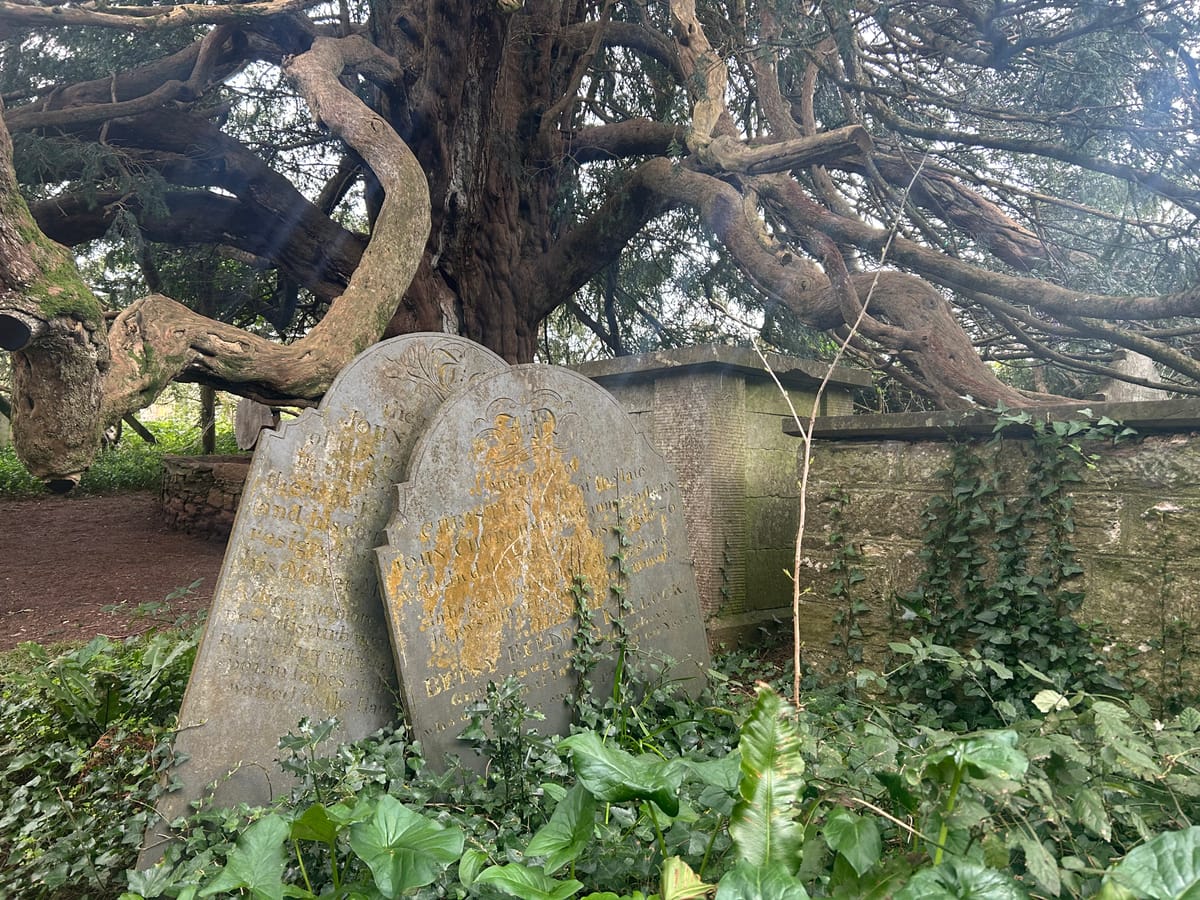
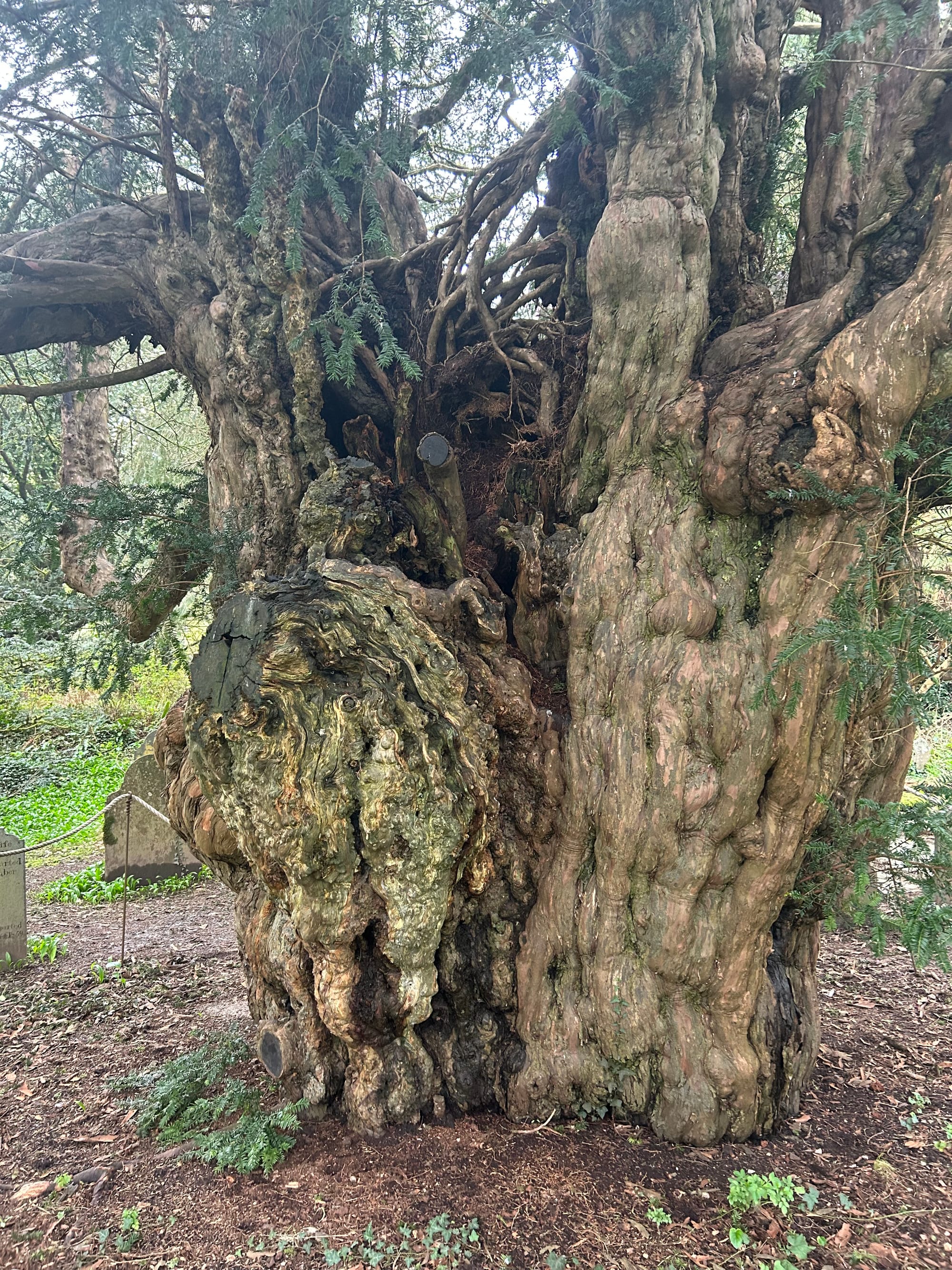
In the churchyard along the river in a village I used to visit fairly often there’s a yew tree that’s around a thousand years old. It does not underadvertise this fact, having its own timeline carved in a chunk of lacquered wood beside it where it humblebrags about all the important historical events it has lived through. But when I could count myself as one of its neighbours I always wondered why people didn’t talk more often about another, even older yew tree, five and a half miles upstream, which has seen an extra half millennium of history and boasts the undeniable folkloric bonus feature of a visible woodwitch clinging to its trunk. Maybe it was just because the older yew, and the hook-nosed humpback figure attached to it, scared people or became associated with a dark incident at some point and they thought it wisest to let the tree go uncelebrated. I don’t know what’s supposed to happen if you walk around it seven times backwards, and something has made me shy away from finding out, but they say if you walk around the younger yew seven times backwards it will grant you a wish. I did it just over a decade ago and, soon after that, the wish came true.
Half a decade later, not long after I met my wife, I took her there and she did the same.
“Do you want to know what I wished for?” she asked, a little dizzily.
“No, just let me know if it works out,” I replied. “Let’s keep at least some mystery in our relationship, even if it’s just for the time being.”
She told me recently that the wish did, in fact, come true. It turned out the wish was kind of undramatic, really more of a sort of multinuanced hybrid of several wishes. I had not realised the tree also catered for that kind of wish, and if I had it’s probable that you would have found me hanging around the tree’s base more frequently.
I walked to the younger yew a few days ago for the first time in a while. I did half a backwards circuit but stopped, having remembered that one of my New Year’s Resolutions this year was to give up the pursuit of yearning.
Something else I quit on January 1st was apps. Less than a month later I was told that the NHS has an app where you can check your test results as soon as they come in. I found myself faced with a difficult choice: discover in a matter of seconds whether or not I was dying or wait 23 days and hear it face-to-face from a human medical professional. I stayed strong, also reasoning to myself that, whatever remarkable feats the app could perform, it was unlikely it would pronounce the phrase “life threatening emergency” in such a beautifully upbeat way as the lady on the recorded phone message at my doctor’s surgery does.
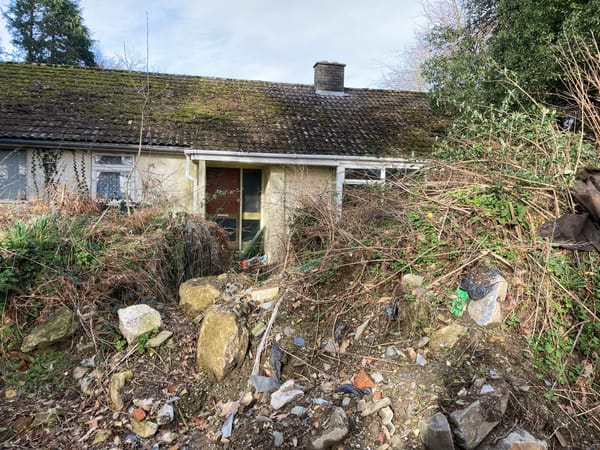
With the light switches in our bungalow it was even easier. Our landlady says that the only way to use them to their full potential is if you download an app. The ones in our bedroom have their own little lights on their switches, a sinister blue hospital glow that interferes with my attempts at sleep. Our landlady said the sole way to turn the blue lights off is if you have the app, so instead I stuck masking tape over them, marvelling, as I did, about how brilliantly straightforward technological progress has made our life in so many ways.
You complain to yourself, and to the void, about it all: the AI being trained to do things nobody ever needed it to do, the apps that help save you the herculean effort of walking three and a half feet to a household appliance and pressing its 'On' switch. And you think, “Okay, so is this it? Am I now Grandpa Simpson, yelling at a cloud?” And this self-doubt is precisely what technocapitalists rely on to wear you down. In many ways, they count on the stupidity and openness of youth, but they also count on older people with curious minds and self-awareness and humility to ask, “Am I just suffering from the same fogeys-not-coping-with-a-changing-world syndrome that every generation eventually succumbs to?” Because it muddies the issue conveniently and might make us fail to see that this is different. That it's about choosing whether or not to protest a rampant evil that seeks to rob us of our individuality and our soul while mining us for data. That it's about a wholly logical wish to reject overcomplication on top of overcomplication being added to daily existence and not being so braindead that you don’t see right through that overcomplication’s posturing as a sleek helpful simplification and that the only motive truly underlying it is greed.
Make any comment about the evil of AI on the internet and someone will inevitably soon come along and reply, "Ah, but you can't halt progress." But there were lots of things people described as "progress" in the past, too. Asbestos, for example.
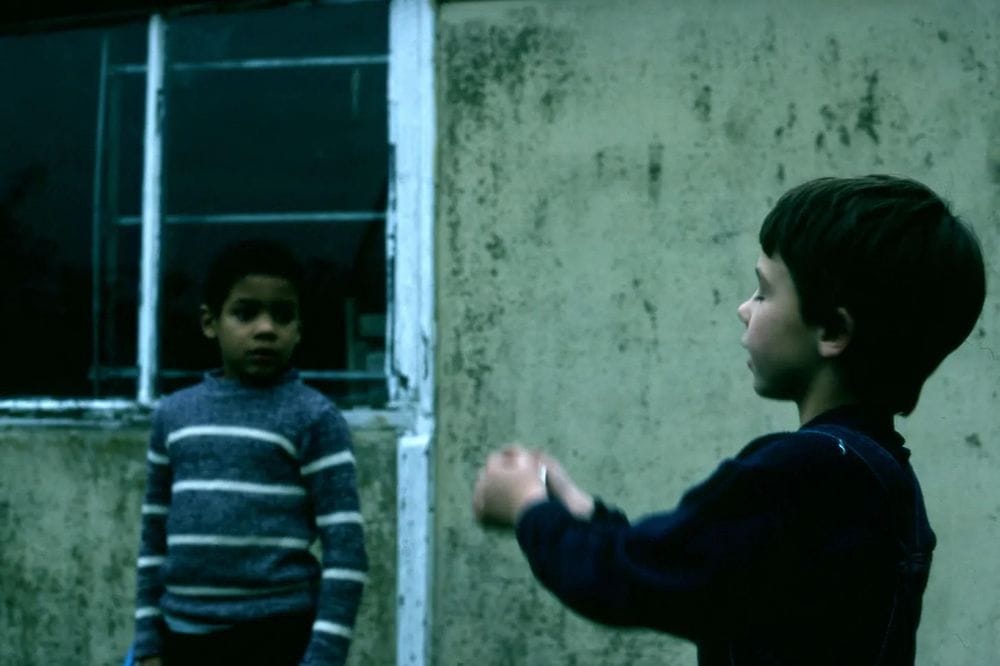
The asbestos industry knew about the life-threatening toxic and carcinogenic nature of asbestos from the 1930s but covered it up for several more decades. It's not a pretty story but I bet the woman on my doctor's surgery's recorded phone message could make it sound like one. It wasn’t until 1980, the year that the actor Steve McQueen died from a rare form of cancer caused by exposure to asbestos during the US marine service he did in his youth, that its use as a building material was completely phased out. By that point, my parents had owned a house with an asbestos garage for half a decade. You can see, in the photo below, which is from about three years after that, that me and my friend Edward are staying away from the garage but also pushing our luck a little bit. My dad had repeatedly told me that if my skin came into contact with its walls, it would kill me. I didn’t know quite how this would happen but I imagined it as being a bit like the bit in The Wizard Of Oz where The Wicked Witch Of The West melts, but with extra chemicals and unpleasant bubbling sounds. Which is why, during the dramatic dive I took through one of the garage's windows later that year, I made triple sure not to touch the wall. I ended up with twelve stitches in my arm. On the plus side: no melting or bubbling flesh. "Result!" I might have said, if it hadn't been 1983 and children had started to talk like that.
I’m not sure if the British countryside was worse or better then, overall, than it is now but there was a definite general feeling that there used to be more stuff randomly lying around that a person could potentially open an artery on. Another contrast: hedgerow porn meant something different to what it does now. Not a hedgerow that’s so abundantly stuffed with spring vegetation that wildflower enthusiasts enjoy looking at pictures of it, but actual porn, in hedgerows. Or perhaps that was predominantly an East Midlands thing. My friend Lee Trout lifting up one of his mum and dad’s sofa cushions in 1988 and showing me and Matthew Spittal his collection of topless Page 3 models, torn out of The Sun newspaper, would have been more of a revelation if we didn’t see far racier stuff than that every time we walked the Nottingham Canal towpath in the direction of Awsworth. Who was it, leaving these torn up pages from Razzle and Escort and Mayfair amongst the reeds and rushes, and what was their motive? Had a disgraced sex ed teacher gone rogue on some kind of misguided philanthropic mission? And how, exactly, was his or her radius so wide?
Up the hill from the canal, in winter, in the village churchyard, we convinced ourselves we’d seen ghosts. I forget most of the specifics of the individual characters now but one genuinely scary one who has always stuck with me was the ghost from the distant future who, seeing me, Matthew Spittal and Lee Trout studying a photo of a reader’s wife from the previous July's issue of Fiesta and trying to work out which way up it was supposed to go, pulled back the cowl that was half-shielding his shadowed face and warned us, in a shaky voice, “Don’t be looking at that, lads. The authorities will harvest your data.”
I have always been a bit slow at getting jokes but it’s rare that it takes me quite as long as 37 years.
And then there was the time we were up in Babbington Woods and, seeing all the porn scattered on the muddy forest floor, Matthew Spittal remarked, “Everyone’s hugging.” That was fucking funny. We thought, at the time, that it wasn’t quite as funny as the time Matthew’s ruggedly built elder sister, who I later found out was named Charlotte but who was known to all her friends and family simply as “Dosser”, sat on a large wooden toybox my uncle had made for me and caused it to explode outwards in four separate directions, but we were wrong. It became clear just how wrong a few years later when, during an episode of The Simpsons where the children of Springfield visit the local comic bookstore, Ralph Wiggum, the son of the town’s police chief, entered the adult section and made the same observation as Matthew had that day in the woods. Except what Ralph Wiggum said in The Simpsons was not “Everyone’s hugging” but “Everybody’s hugging”. A clever modification, I thought, by Simpsons creator Matt Groening, to protect himself from accusations of plagiarism, although I scratch my head about how or why the ascendant Oregon-born animator might have found himself hiding behind a stand of beech trees in the West Nottinghamshire countryside in the summer of 1988 when he had pressing commitments in California developing his new cartoon family for The Tracey Ullman Show. I try not to think about it too hard and, by way of explanation, satisfy myself with the old saying, “Talent borrows, genius steals”. And none of this stops it being one of my favourite scenes from The Simpsons.
Actually, I feel unfair saying that everyone only knew Matthew’s sister by the nickname “Dosser”. That's not true. Most of us pronounced it more as “DOSSah!”
In those days Matthew, Lee and I were discovering new facts about our blossoming teenage bodies on a daily basis. One day, for example, one of us would learn that by rubbing an inflated balloon abrasively against our hair we could make the balloon stick to a wall for anywhere up to twenty whole minutes. Then the very next day another of us would realise that, while our bodies were still very different to that of our Chemistry teacher, we could make ourselves look physically a lot like him by putting two fingers on our chins and making our heads go for a little pretend walk across our desks.
Then there was, of course, the discovery of the opposite sex. I think, even by this early point, I’d found out that limiting the girls you fancied to the ones who already had a boyfriend was a good safe option for the more circumspect romantic dreamer. By the age of 35 I’d moved well past that habit but was finding out that adults, aided not inconsiderably by the internet, were not always transparent about their relationship status. In autumn 2010 I was talking to a near-stranger about the prospect of the two of us going on some kind of date. A few days along, she admitted she still had a boyfriend. I totally got it. Sometimes people in an unfulfilling long term relationship want to tentatively come to the mouth of the cave, have a look outside and check to see if there are any signs of life before they decide whether or not to make the jump into the valley below. The conversation petered out. A month later, she reappeared. “I broke up with my boyfriend yesterday,” she announced. “Fancy comforting me? Nothing sworded, though.”
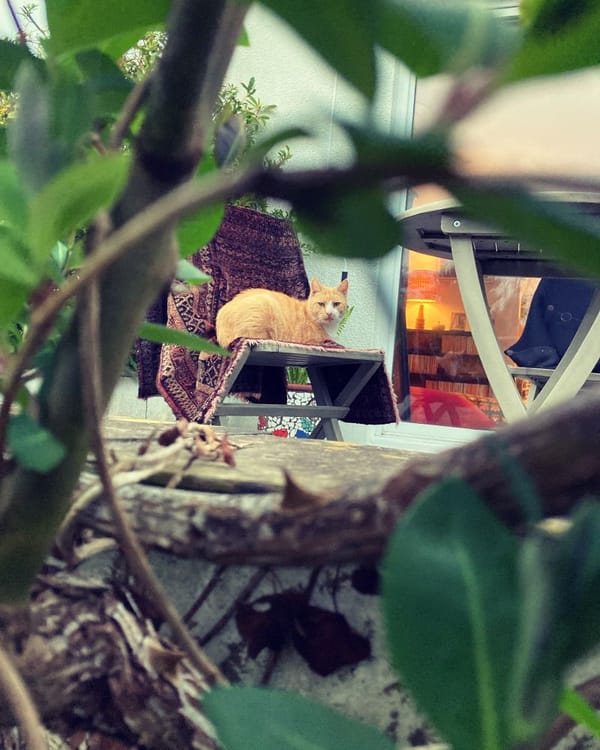
I think I know how this scene would be directed in the film of my life. I sit on the sofa in my old living room with my laptop on my knee. Beside me sits a cat. In front of me, on the TV, is Some Like It Hot, paused at the scene where Jack Lemmon and Tony Curtis board the train in drag. In the background is a chair I dislike but haven't yet got rid of, because I'm worried that if I do my ex will tell me off, even though we've been broken up for well over a year. The camera zooms in on my laptop screen as I type "Don't worry, I am down to only one sword now, having eBayed the others, and I promise to keep that in its scabbard the whole time we are together" then delete it and type "I'd definitely be up for a coffee some time... What about that new place in the Lace Market?"
Nothing happened, sworded or otherwise, as it so often doesn't in such situations. I probably wouldn’t even remember our interaction if not for that spelling error. But she will still pop into my mind, on certain occasions: when I see some of the wall decor in the banquet hall of a medieval heritage building, for example, or one time not long ago when my wife's best friend was telling me about a bisexual romantasy novel she’d read centred around a prestigious fencing tournament. That said, such occasions are surprisingly rare, especially when you consider that it's generally agreed we live in a more sworded society than we once did.
In many ways, I am still the person I was at 13. I like radishes every bit as much as I always have. Just as I did back then, I rise earlier than many of my peers. It gets to be more of a habit at this time of year, as I hear the dawn chorus building in glorious intensity. Just yesterday morning I was saying to myself “Isn’t it getting light early outside, all of a sudden!” But then I realised it was in fact still not much past 2am and the masking tape had fallen off the light switch again.
Outside, the hedgerow porn is long gone. Who on earth would now want it, or indeed possess it to scatter, besides old men barricaded into fetid houses by self-made walls of yellowing media? Even when we were wide-eyed 13-year-olds with no internet connection, the offputting grottiness far outweighed the titillation. Maybe the hedgerow porn never existed here in the South West of The UK in the first place. Too classy. Not a sworded enough region.
When people from around here tell me that a population centre in Devon is or was a “fighting town” what I now realise they mean is that it's the kind of town which, if it was in Nottinghamshire, would be the one the lifestyle magazines singled out as desirable due to its organic Sunday food market and biannual craft fair. It’s a bit like back when I first moved here and one of the ways I could feel the place altering me, in addition to the gradual softening of my accent, was that when I was walking along a lane and heard a commotion in the undergrowth I started to think “Oh, how lovely: a deer” instead of “Some people are shagging.” Appalling roads, though. They still do surgery on them but what that surgery usually means is “put a plaster on the machete wound and, when it starts to peels off and putrefy, just put another one on top of it”. If you reach your walking destination, 17 miles away, with four fully inflated tyres you feel like you deserve your picture in the local paper.
But it’s so pretty when you get there. It makes it difficult to hold a grudge.
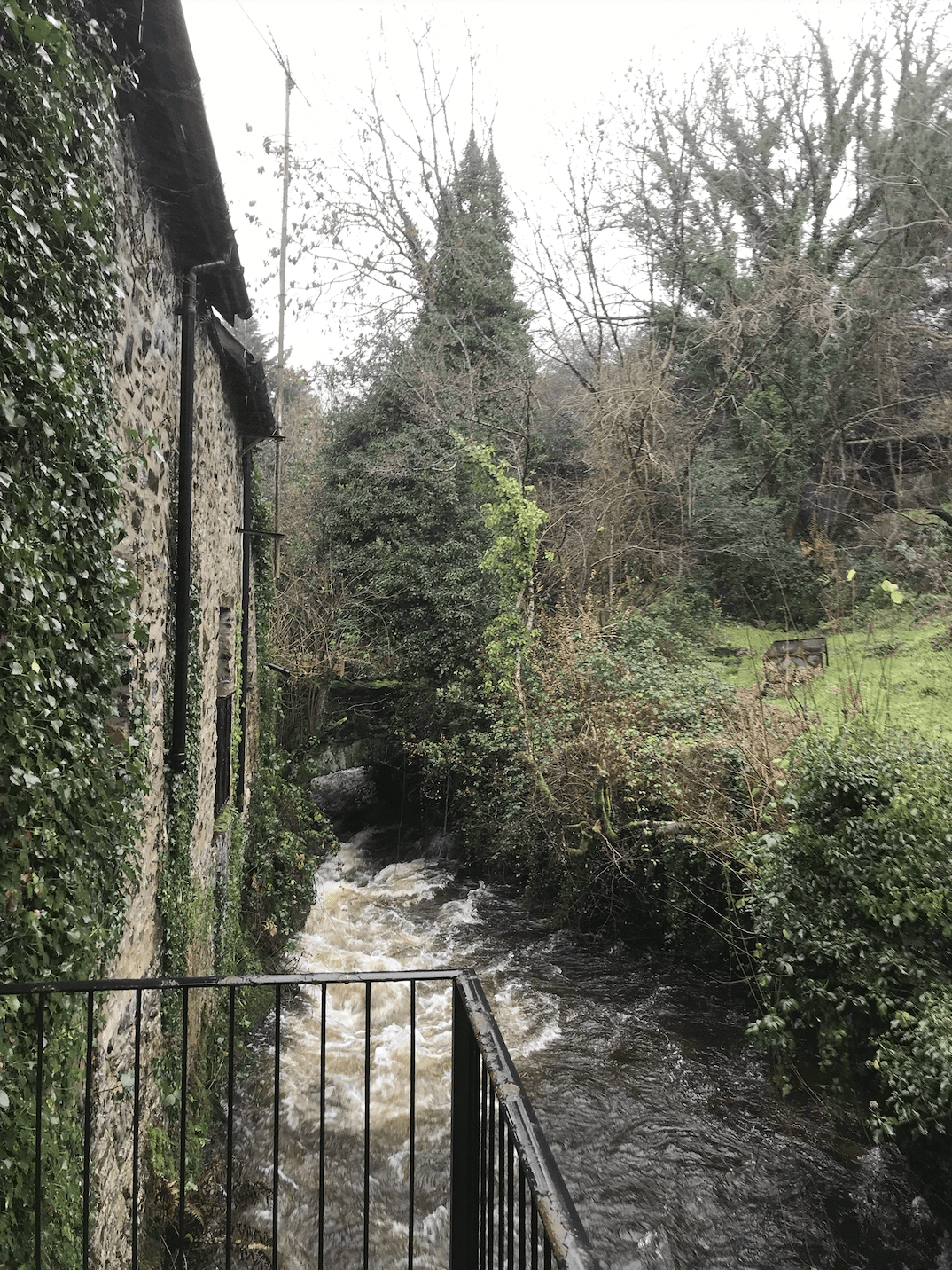
I walk to the churchyard, along the sunken lanes, and walking, as always, shakes memory’s cupboard drawers. I recall the time I descended this rubble-strewn holloway in the dark, past a ruined barn, 11 years ago, tipsy on cider from the annual local wassail, and gatecrashed a parliament of owls: jeering owls with owl jowls shouting down the opinions of their political rivals while other owls called ineffectually for order. I spot stuff in the village I didn’t notice at around that time and reacquaint myself with stuff I did. An attractive carving of an anchor on a grave. A memorial plaque for someone called Derrick ‘Busty’ Squires (how did I miss him?). A coat of arms, featuring two bladed weapons (surprisingly sworded stuff, for this area). I remember the idea that popped into my head a few years ago of writing a collection of short stories centred around all the “wife of”s in a graveyard: the women remembered by history only as an annexe of the husband they are interred beside. I note how the "new" end of the churchyard reminds me a little of a shiny bad grey extension put on a good non-shiny house.
The whole of the land, all over the valley, has this intrinsically March atmosphere, as if a stern authority figure has just grudgingly told it that it was finally allowed to breathe out. I went to see the older yew earlier in the week and even its clinging woodcrone looked noticeably lighter of mood. Below the younger yew, two gravestones, really old ones, appear to be leaning in for a kiss. I clocked them last time. How could I not? I’m made of stuff soft as the soil and the fact does not escape me that those gravestones began their residency with much more space between them. Relationships can surprise you and grow closer late on, maybe sometimes even in death. Could it be possible, I wonder, that they've udged up a tiny bit more cosily even since last time I was here? “Everybody’s hugging,” I hear Matthew Spittal announce in my head, in Ralph Wiggum’s squeaky idiot voice, and it feels no less true than it’s ever been.