Recommended Walks
It is low tide as you stroll along the creek, wild geese burst into tears overhead and ancient bone dice litter the foreshore.

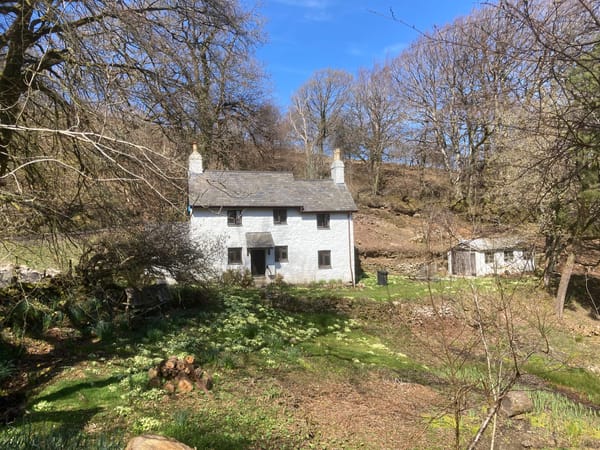
1. A HEALTHY YOMP FROM CUCKLAND VIPERS FARM TO MOGFORD SHALLOWS AND BEYOND (11.7 miles)
It is a day for walking on the margins, a time to avoid the centre of everything scrupulously. Your route takes you down a sunken path where the assorted rubble underfoot feels as untrustworthy as a plumber’s diary. You turn left down a farm track and arrive at a barn and look up at a window in the barn which has thick vertical wooden bars which put you in mind of an old prison. A farmer arrives, tells you not to look at it, and asks you what you are doing. You reply that you are here to research your novel, which is about evil farmers. He invites you in for some soup.
Soon you realise you are living at the farm. It is hoped that one day you will marry Beth, the farmer’s daughter, although you are yet to meet her. All the farm’s four fields have names: there is Thistle Field, Volatile Old Hag Field, Peter Field, Gentle Field and Brian Field. The farmer tells you he was planning to have more fields but was worried he would forget what they were called. At the rear of Peter Field, which is named after an uncle who once had a panic attack there, you hop a fence, because it seems more interesting than merely jumping it, and head down and then up a gully. Through the gaps in the hedgerows you see rusting farm machinery watching you like sad old robots staring through the windows of a disco.
The path eventually leads you to Mogford Shallows, a village where no-longer-new high-specification houses overlook a steep valley spotted with apologetic bungalows. The houses range from two to four beds, with gardens of varying arrogance, each boasting herringbone oak flooring, integral hydraulic seating and appliances plus a conversation pit for weekend entertaining, and were built with highly successful individuals in mind. Since they were first marketed, in 1974, the houses have remained empty, owing to the fact that people in the region distrust success. Outside one of the bungalows in the valley you see a sign next to a pile of shredded wood, advertising ‘Free Chippings’. You quickly cram seven chippings into your pocket but a man emerges from behind a hedge and informs you that there is a strict limit of six chippings per person. For the next hour, you haggle with the man. By the time you have finished your business with him, you are in possession of eleven chippings, his 2005 Ford Focus estate, a blu-ray player and have a date arranged with his daughter for next week. He tells you his name is Brian Field. “You mean the Brian Field who Brian Field is named after?” “No,” he tells you, adding that he’s just a guy who happens to be called Brian Field, that a lot of people make this mistake, and it has now become annoying. He picks the bulb of a young shallot from his allotment and throws it at your back as you leave.
Chainsaws ring out as you climb the opposite side of the valley. You wonder why this should be then realise it is because they are a special kind of chainsaw, with bells attached to them. You are heading towards the moor now. You can tell from all the moss, the sudden drop in temperature and the skulls on plinths. You stop to consult your map. Seeing you doing so, a stranger asks if you are lost. “No, I have a map,” you reply. “Can you not see it here, in my fucking hands?” In a meadow further on you see Beth, the farmer’s daughter. Something makes you instinctively know it’s her, even though you are yet to meet. Perhaps it is your strong, almost mystical sense for people and the places they belong, or maybe it is the embroidered badge on her coat that says “BETH”. You say hello, although you are hesitant to interrupt as she is busy kissing a Victorian fireplace she has found abandoned in the meadow. “I suppose it is bad luck for us to see each other before our wedding day,” she says. “But that’s ok. I’m very enthusiastic about bad luck. I wrote a dissertation on it.” She asks you how you are settling in at the farm and tells you that the room you are staying in actually used to be hers. “I am sorry about all the bellows and pokers in there,” she says. She tells you that you were right in suspecting that the barn at the farm was a prison, since that is what it has been used as since the 1950s, when it first opened. The original and sole inmate, a jazz musician who was arrested and tried for being too experimental, still resides there. During his incarceration he has honed his craft considerably, expanding into folk, classical and rock, and writing a double concept album about Napoleon. All this music remains unheard, except by the jazz musician himself, and in distant fragments by Beth and her parents and various underpaid farm labourers. “But that’s ok,” says Beth. “It’s the creative process itself which is most important to him.” You and Beth walk hand in hand through a field of murdered plants. Your progress is slow, due to Beth still dragging the fireplace behind her. Above you, a waxing gibbous moon looms huge in the sky, which strikes you as odd, since it is lunchtime. “It could never work between us, though, long term, I don’t think,” Beth tells you. “You are too easy to talk to and I find people with long arms unnerving.” You walk on, past the ruins of lime kilns where dozing wild cattle are whispering to one another in their surprisingly multicultural dreams. Rain comes in from the west, then from the east, north and south. Your walk ends.
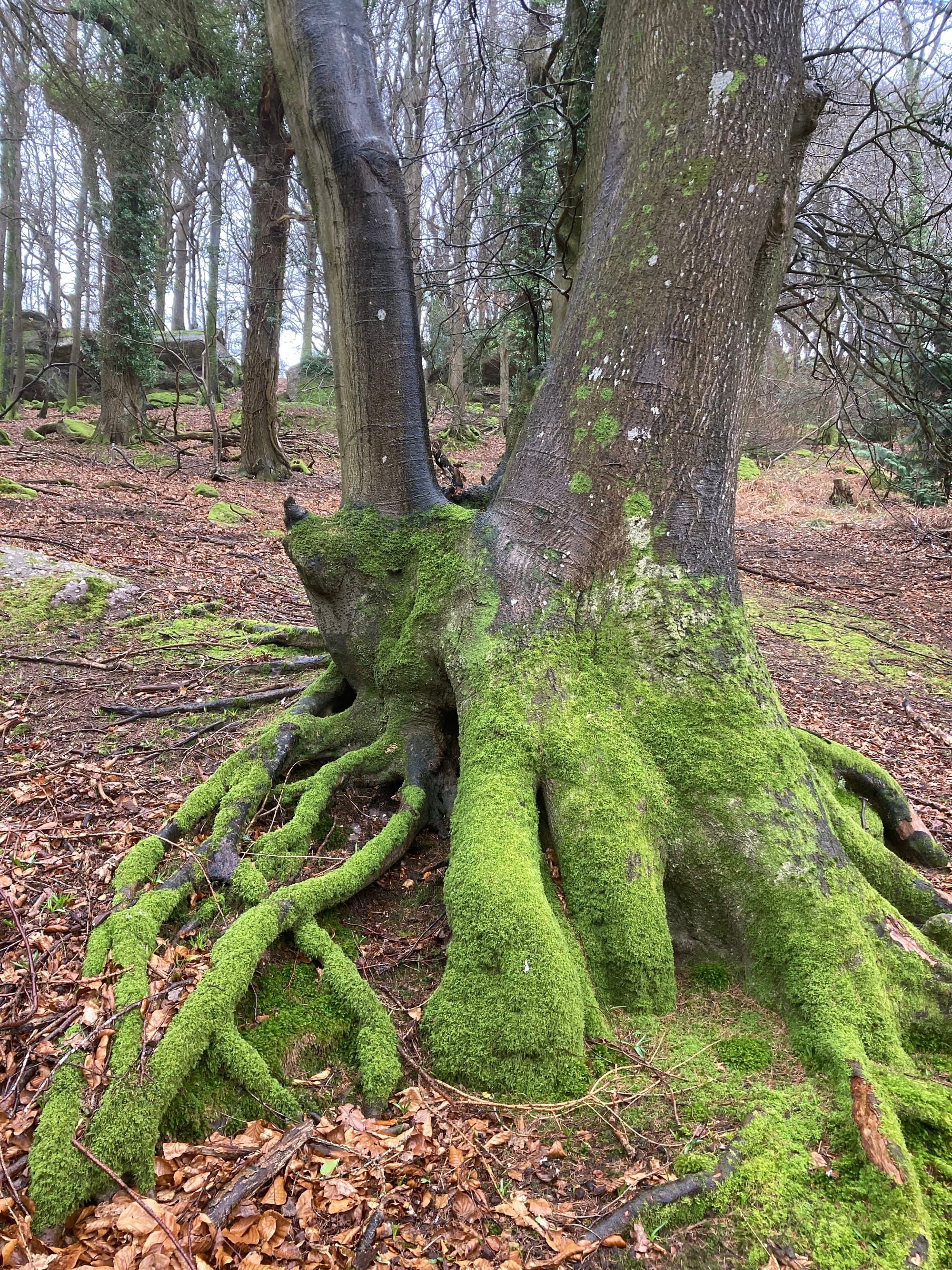
2. REFLECTIVE WOODLAND STROLL (6.5 miles)
Today you walk at the northern extremity of the woods, where the trees never forget to put on their thermal underwear. As you climb into the forgotten forest, the path is redder than usual, as if peat has mixed with the entrails of a thousand men. You pass an old cow trough and brittle furred sticks that crumble underfoot. Deep in the trees there is a converted building they call Maureen’s Barn. The barn has no electricity and running water and nobody called Maureen anywhere within 27 miles of it. It is said that a family bought it some time late last century then comprehensively failed to live there. Once, when you were bored, you walked up to the barn and broke in then played Scrabble in the living room, against yourself. You won by 18 points, with your record score of all time, but there was nobody there to see it, apart from the other you, who you defeated and who soon became bitter and withdrawn. Today you press on past the building, ignoring it, feeling you are done with it, that it is emblematic of someone you no longer are. Deeper into the woods, the mist returns heavier, like the steam in your step-father’s bathroom. You return to the bathroom in your mind and look for your reflection in the mirror but you can no longer see yourself. You remember the room well, the way your step-father decorated it, his obsession with unicorns coming irrepressibly to the fore. Each tile featured the same four unicorns huddled in a circle, as if plotting. There was a bigger unicorn on the toilet seat. The taps were horns. He promised you the horns weren’t real, even though you once saw a maggot crawling out of a fissure in one of them. Your mother listened patiently in the living room as he repeated his suspicions and theories, such as his strong belief that horses were living half of their true life. He was a hard man, relentlessly critical. “Act your age, not your shoe size,” he told you, which seemed particularly unfair, as you were five-years-old at the time, and wore a nine and a half.
On the lower ground, as the mist clears, you begin to see the corners of sheds and bothies and shacks poke out of it: forgotten, neglected buildings, redolent of smoke and minor apocalypse. From a leaning metal building shaped like a pepper pot, a man emerges, dressed in clothes that give mystery to his body shape. He introduces himself. Something you can’t place immediately seems wrong about him. His XX Large ‘Simple Minds 1992 Glittering Prize Tour’ T-Shirt but something else, too. He says he is a struggling antique dealer who has travelled here through an industrial time portal from 30 years in the past to receive insights about the surprising objects people now find valuable. “Is this one of them?” he says, handing you an undistinguished white tea cup. “Please tell me the truth.” You reach a house with large ornamental metal gates and pretend it is where you live and tell him you have to go now, giving him directions to the nearest auction room. But the house is not yours, so instead you pass through the gates and decide to hide in the garden until the sound of the antique dealer’s footsteps has disappeared. Surprisingly, the damp ground comforts you and, tired, you decide it is a natural place to conclude your walk and sleep for a while.