Notes On A Castle
It seems there’s always a planned chapter I end up leaving out of one of my books - sometimes because I go cold on an idea but more often because it simply ends up not feeling like the right fit for that particular universe. I spent almost a decade intending to put this absurd account of an encounter with some Norfolk cattle in various non-fiction books before it finally made it into Notebook in 2021. I’d originally intended to tell one part of the narrative of Villager entirely through the guestbook of a self-catering holiday cottage, but then the story moved a little sideways from the one I’d thought I’d be telling, and I wrote the Village Message Board section instead.
I recently revived the guestbook idea since I've found a better home for it and I never did stop relishing the prospect of messing around with it. A question I've asked myself about it, both times, is, “Can this simultaneously be realistic and a device that's interesting enough to sustain a narrative?” After all, lots of air b&b guestbook entries don’t say much beyond “a very pleasant stay, despite the weather” or “I recommend the local pub whose cod is some of the best I can recall eating”. But then last weekend I spent three nights at Clytha Castle, on the edge of the Brecon Beacons, and I realised I’d invented a non-existent obstacle for myself. In fact, if there was a worry that crossed my mind while reading extracts from the 11-volume, 52-year-old logbook for Clytha, it was what a high narrative bar the guests had already set, and that, with my fictional version, I might not be up to the task of reaching those dizzy heights of colour and intrigue.
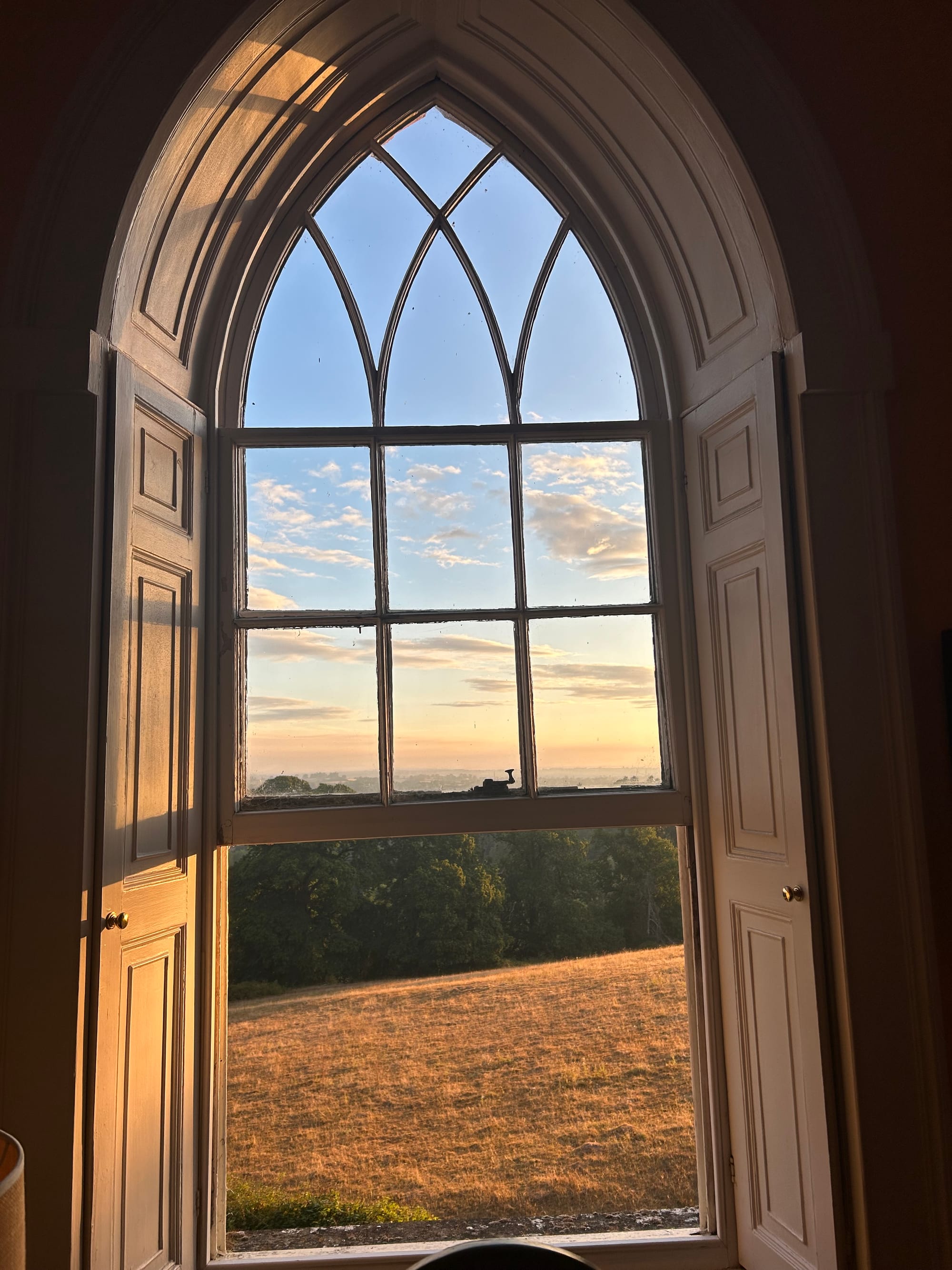
It’s a testament to what a charismatic and atmospheric building Clytha is that the vast majority of people who have stayed in it since the Landmark Trust opened it up to the public in early 1974 have clearly made the writing of lengthy tributes to it a priority during their - probably often quite hurried - packing at the end of their stay. Some include attractive and finely detailed paintings and drawings of the building. Some write what threaten to become entire dissertations. Some return decades later, emotionally, and celebrate it again. Occasionally an entry pops up that feels more like an excerpt from a whimsically British 20th Century novel than something that could happen to real living people. In November 1979, Amina, age 9, while being told by her father that the cattle grid has been made of recycled parts of Britain’s defunct railway lines, spots a hedgehog trapped perilously under the grid. But all hope is not lost! Her father’s friend, the resourceful Mr Wrigglesworth, happens to be visiting, and he has the bright idea of going to fetch his leather driving gloves, which will help him rescue the hedgehog without causing injury to his hands. By the time Wrigglesworth returns, however, Amina's father has stolen his thunder, rescuing the hedgehog barehanded, like some unreconstructed masculine animist god. Amina later reports that “Monmouth has nice buildings” but she did not enjoy the family’s trip to Tintern Abbey since the abbey is “too ruined for me”.
Intriguingly - especially given the diversity of opinions on offer - an early 2020s entry states: “I agree with everything in books 1-10.” EVERYTHING? It seems improbable, as some notably polemic individuals are anthologised here, with plenty of varying hot takes on the region and its various attractions. In September 1979, in an entry that presciently anticipates the restaurant’s appearance on Gordon Ramsay’s Kitchen Nightmares more than three decades later, John Burgess pulls no punches in his review of The Walnut Tree in Abergavenny, calling the establishment “expensive, congested and mediocre”. A ghost in the north turret of Clytha pops up, seemingly with a mysterious ancient score to settle with pet dogs. Perhaps even more curiously, early in the first year of Jim Callaghan’s reign as Prime Minister, the McNaught family arrives at Clytha and, seeing a large group of pheasants in the woods, confess to finding the sight “very tempting” (because they would like to go and live as pheasants?).
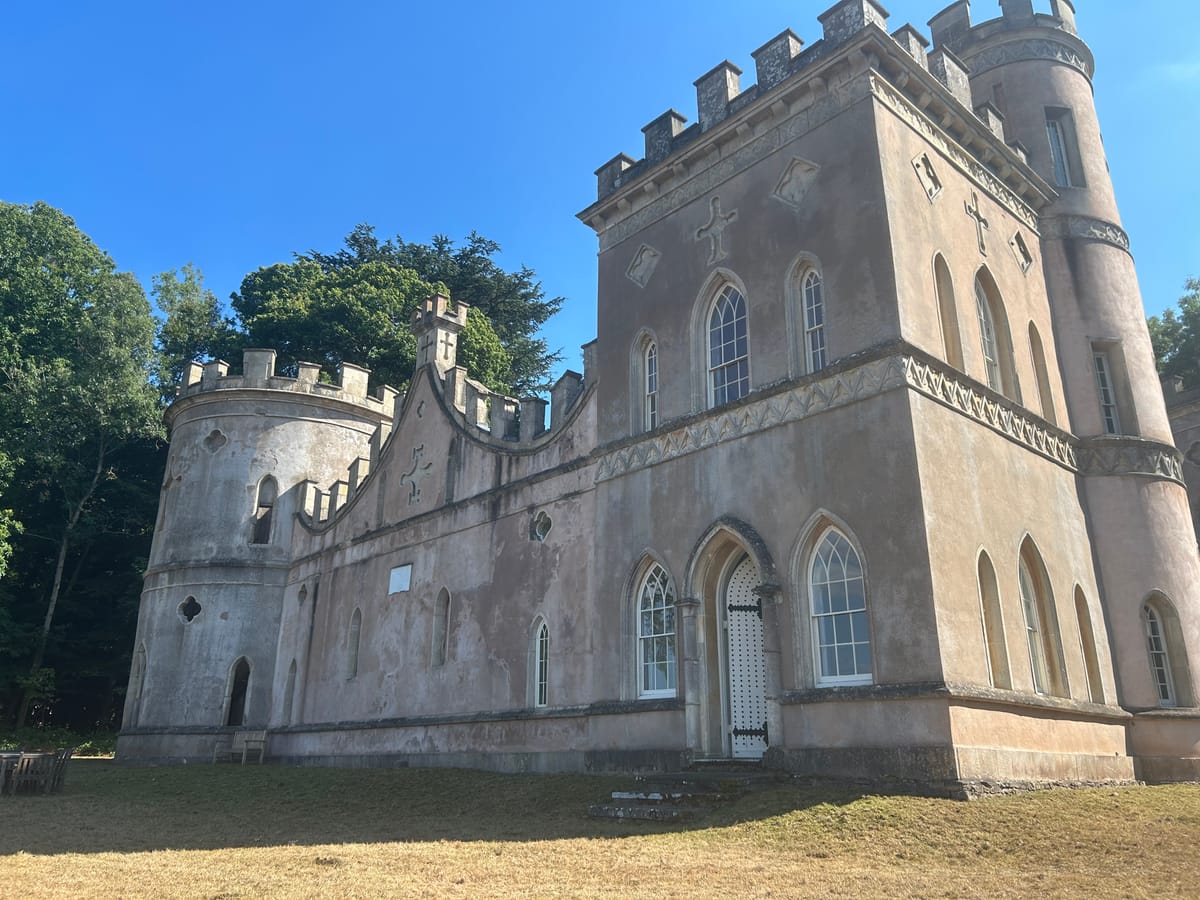
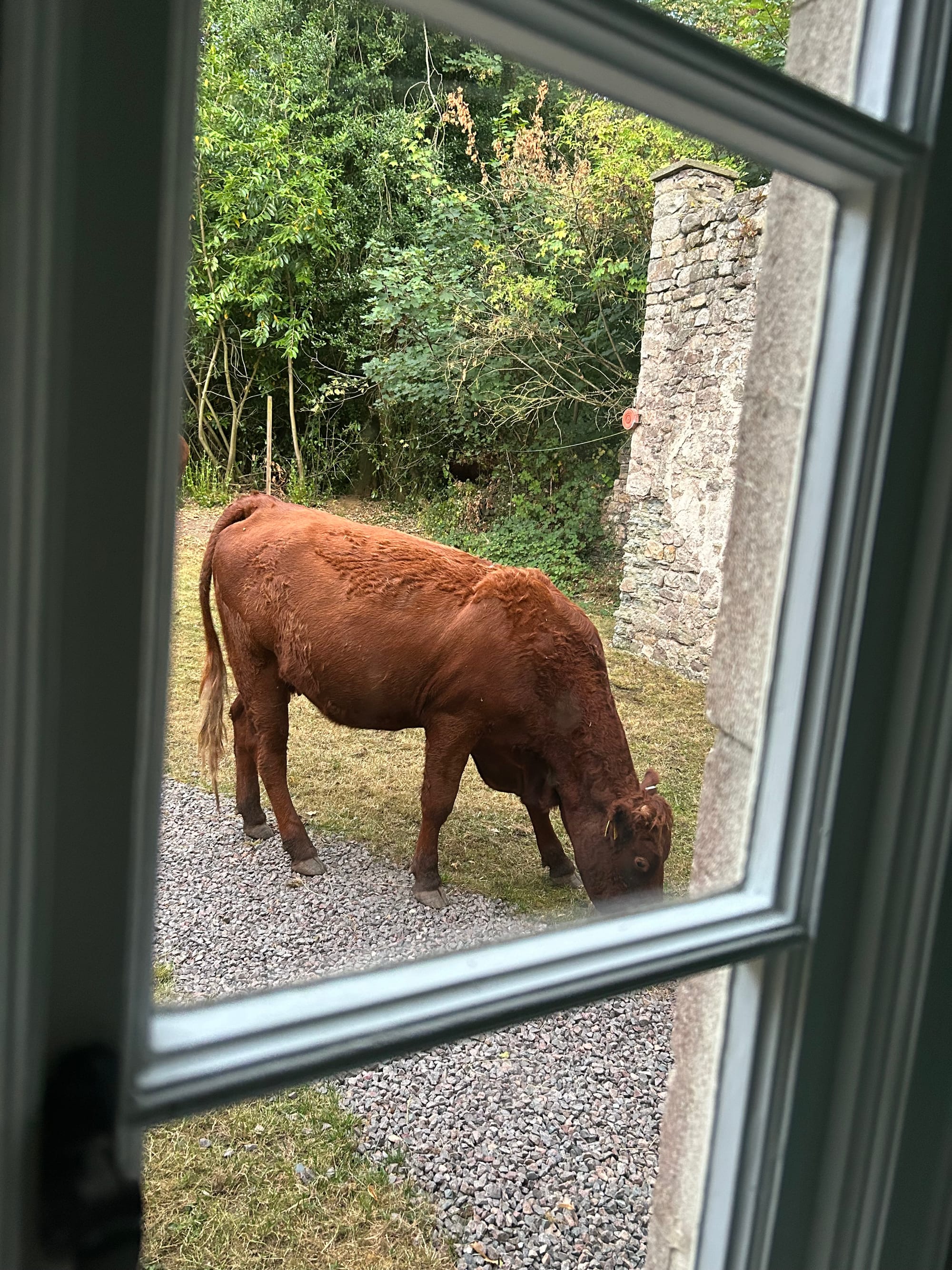
According to my 1938 first edition of Welsh Border Country, by P Thoresby Jones, Clytha is part of the Jane Austen period craze for “artificial ruins” and “an essay in castellar Gothic”. A folly rather than a true defensive fortress, it was a commission for architect John Davenport in the late 1780s from William Jones, owner of the surrounding estate, as a tribute to Jones' recently deceased "excellent" wife, and overlooks the valley of the river Usk. Its commanding second floor bedchamber boasts a beckoning view of the Sugar Loaf mountain, on the other side of Abergavenny, a town where Jones might or might not have had his periwig made of goat’s hair (goats and their bristles were the town’s big export, long before it became more famous as the place where war criminal Rudolf Hess was imprisoned during the second half of World War II). But the guestbook could just as easily be viewed as the story of a colony of pipistrelle bats as of a unique, lovingly restored building, The bats are right there in Clytha's first summer as a Landmark building, in the corresponding weekend to my stay, after which Mr G Turvey complains that he and his wife “woke at four in the morning to find six of them thumping around the ceiling” and their descendants were still going strong last week, although, over three nights, only one was sociable enough to join me in the bedroom itself. Once I'd identified them, and realised that the scratching on the window that woke me in the early hours of Friday morning was not the ghost of Jones, his wife, or the mysterious dog-hating turret ghoul, I soon became quite invested in their progress. The hole in the mortar above the gothic arched window that leads to their roost was rather small and it took most of them seven or eight goes before they made it through. I tended to drift back to sleep after that before being woken pleasantly by the sound of cattle munching on the dry lawn outside, having made a renegade break through the woods from a nearby meadow.
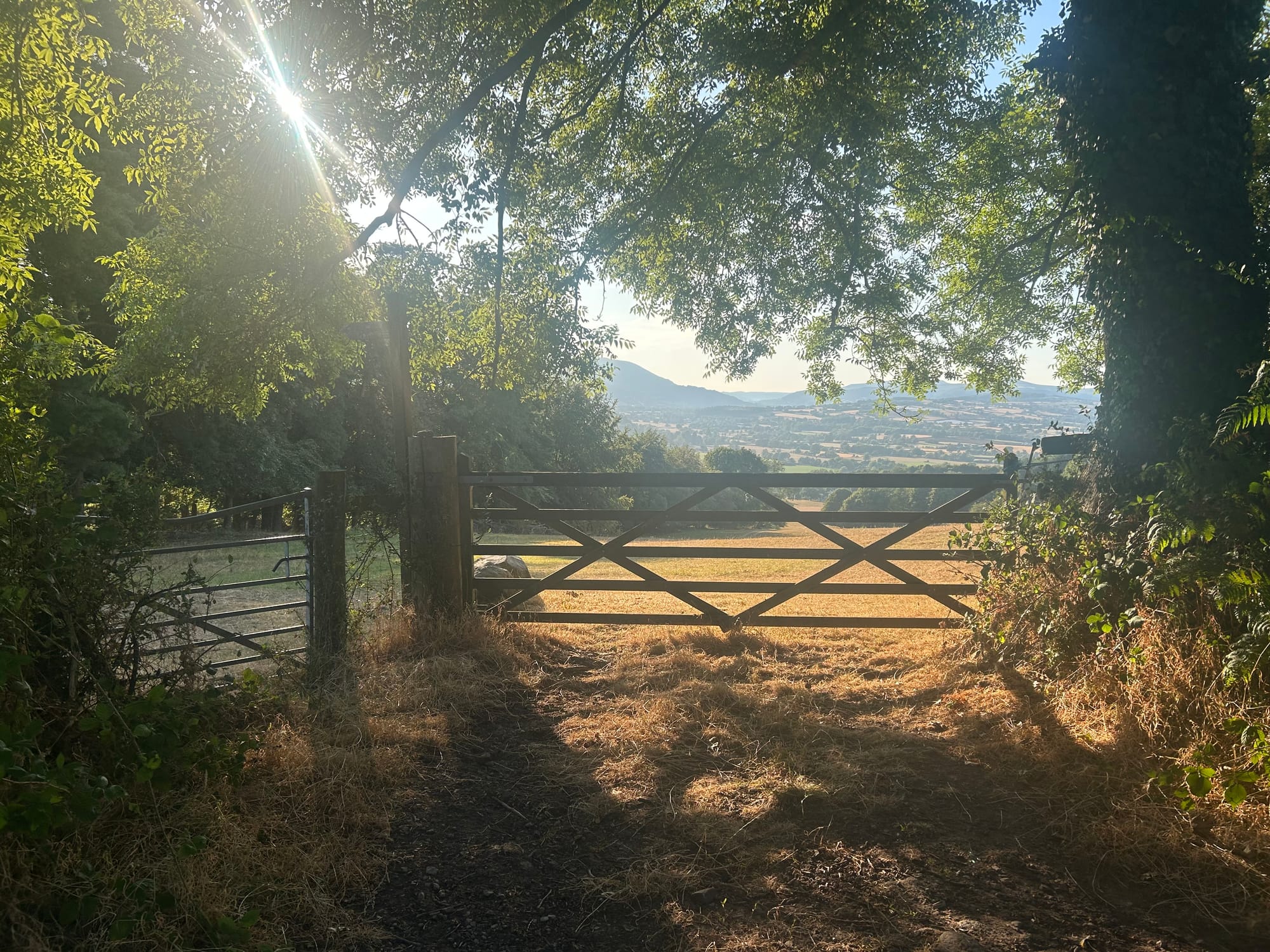
I'm not totally sure I'd want to stay alone at Clytha at winter's height, on top of this Border Country hill, hundreds of yards from any other building. The portraits of Jones' sombre-looking descendants in the halls and bathrooms might seem a little bit more ominous, the walk along the long slate corridor leading from the living room to the kitchen that little bit more lonely and echoey. But what is winter? Who can even picture it right now? The drought seemed somehow more surreal and Mediterranean on the edge of the Brecons - an area which, like many of its visitors, I've only ever previously known as a land of rain - than it has in my home county of Dorset. Keith, the AA employee who replaced the tyre I shredded on the lower slopes of Ysgyryd Fawr, said he previously hadn't been used to being out rescuing drivers for more than three days without getting drenched, let alone three months. A couple of mountains were on fire a few miles to the north west and light smeechy haze was ever-present during my ramble from the scattered village of Pandy to the rear of the Sugar Loaf, adding an additional dreamlike ambience to the most persistently magical walk I've done this year. I took a spontaneous, free jazz approach to my route, orientating it around pretty much any patch of blue I could spot within a ten mile radius of my starting point on my OS map of the Eastern Beacons. One of the patches - a rare, deep bit of river beneath a humpback bridge - proved an even better place than I'd imagined to cool down, mountain water still being quite bracing even in 28 degree heat. Another - a pond above the Coed-ya-Cerrig Nature Reserve - did not tempt me to submerge but did offer what I am sure is the largest number of dragonflies and damselflies I've ever seen in one place. That night, in my dream, the Jewelwings, Chasers, Skimmers and Petaltails of my afternoon merged with the bats in the wall and the choppers in the book I'm reading about Vietnam into a fleet of outlandish sky creatures, descending on me, but not in an unpleasant way. I don't think it would be scientifically possible to have an unpleasant dream here.
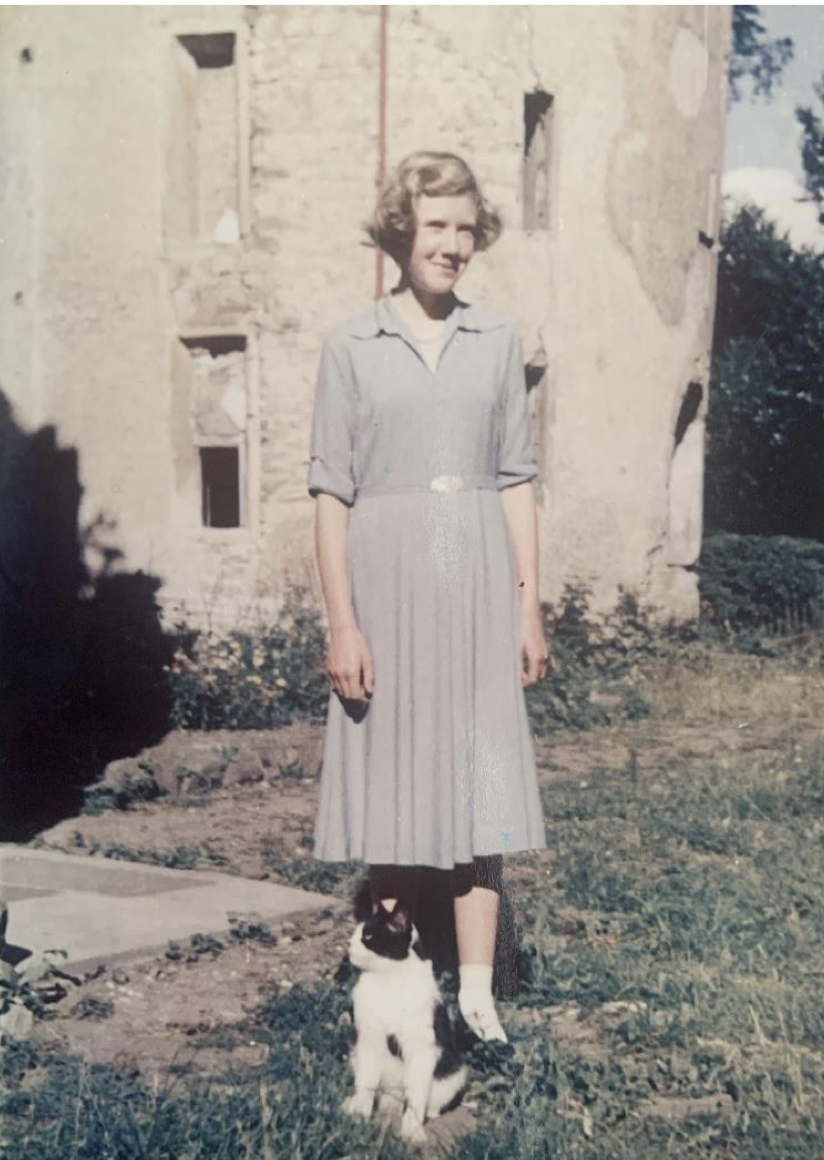
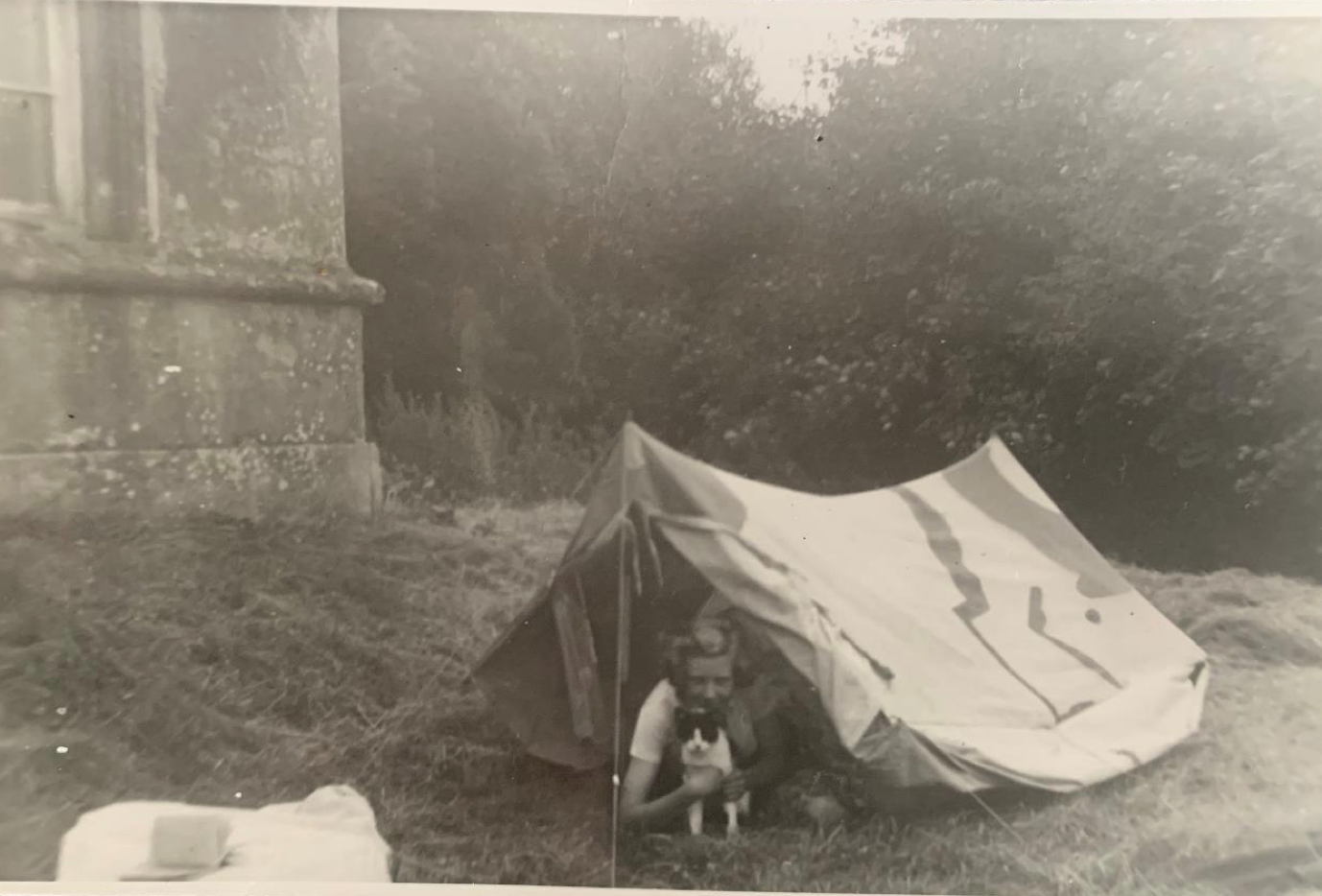
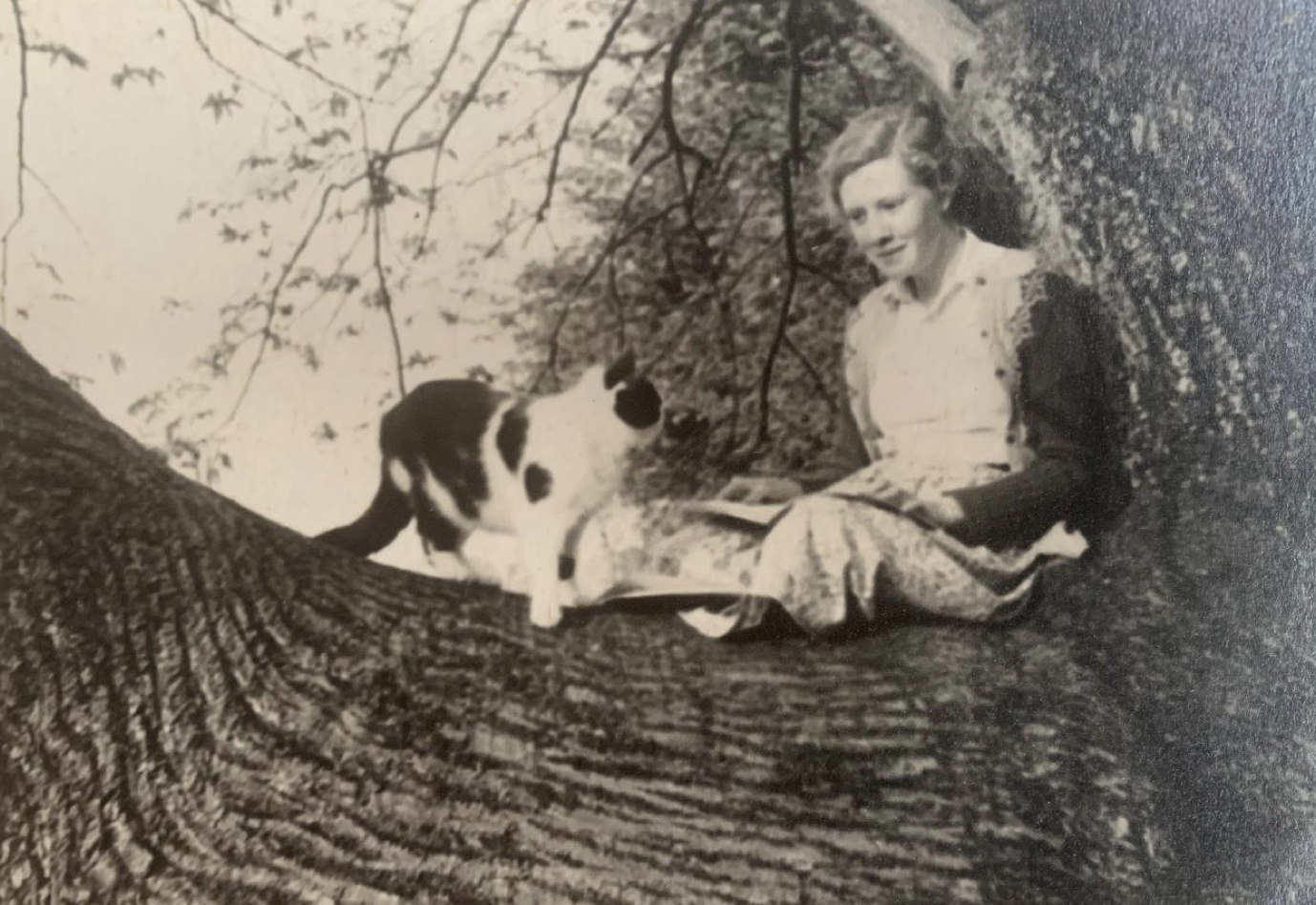
Why had I brought a book about America's disastrous intervention in Vietnam here? Why did I bring five other books, too? Because I always bring twice as many books as I need on holiday with me. Also because there is something about the fairytale nature of a castle that promises an abundance of stories. This is underlined by the contents of that eleven volume logbook and a photograph of one of Clytha's last residents, Enid Harrington, who lived here in the late 1940s, reading in the huge chestnut tree in the front garden, plus in Enid's recollections of obsessing over the Rupert The Bear comic strips the local farmer used to cut out of the newspaper for her. Enid originally moved to the Clytha Estate - formerly belonging to the Jones family and now in the care of the National Trust - in 1941 after being evacuated from Cardiff along with her mum, Sarah, and brother, Gerald. I am assuming she liked the place because when she emigrated to Australia in 1966 she called her new house "Clytha". She also evidently had a quite brilliant cat who enjoyed camping.
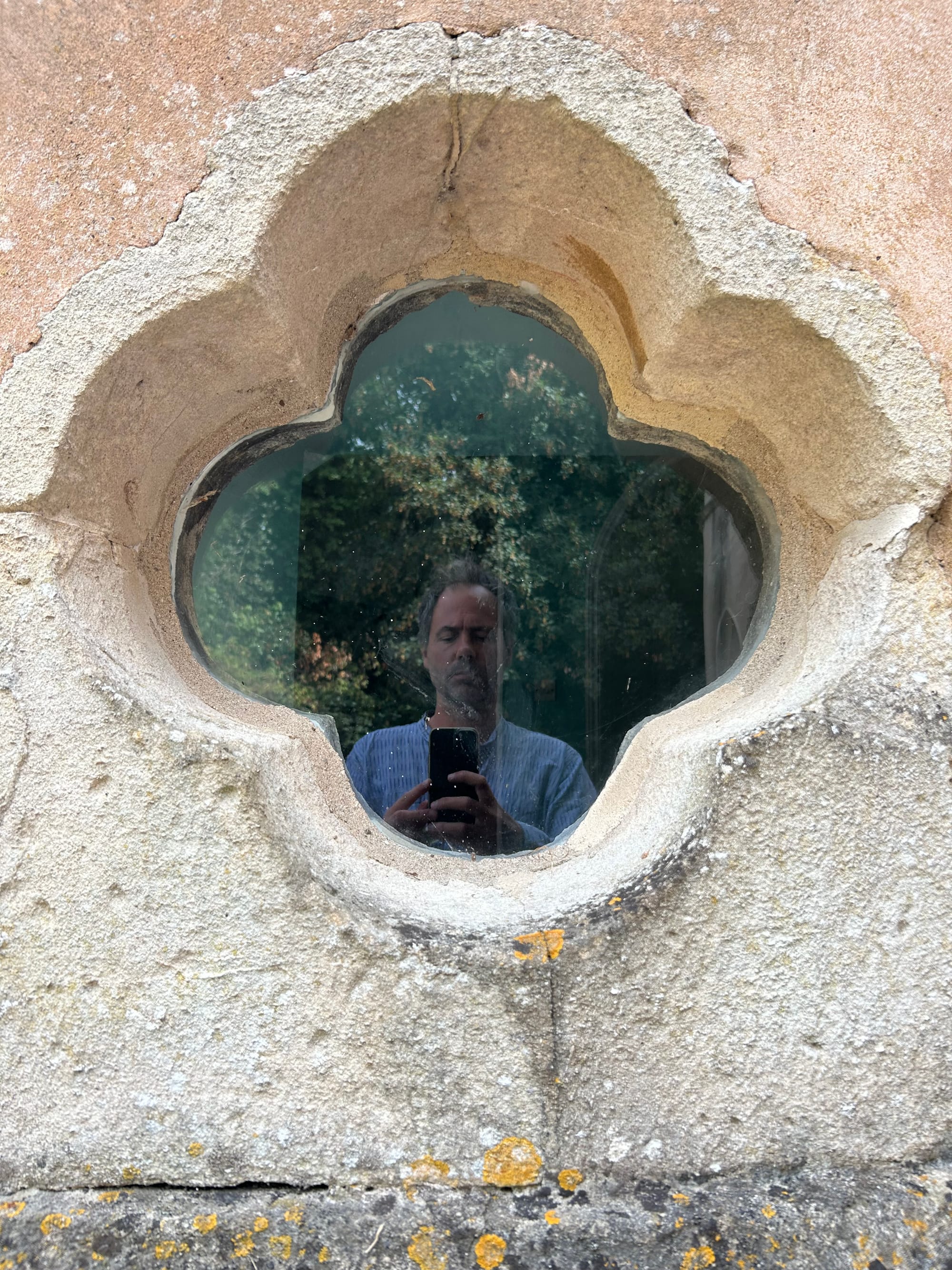
I've stayed in a Landmark building before and found it historically fascinating but it was while at Clytha that I got a fuller sense of the importance of the work the Trust has done since it was set up in 1965 to rescue buildings of historic interest and architectural merit. Back then, Clytha stood empty, save for those ubiquitous bats. When the Trust took it on, six years later, there was much to be done to make it habitable for holiday guests: reroofing, repointing, new floors, plus the mandatory installation of hot water and electricity. But the conservation and preservation of buildings (the Landmark Trust now own over 200 mindbogglingly diverse ones, including a few outside the UK) is only one element of a huge, dazzling mission whose most ardent devotion could be argued to be not to architecture but to time itself. What is also going on is the preservation of lives. Because William Jones was clearly a massive nerd when it came to keeping records of his accounting, we learn of his payment to a builder called Thomas Rachel for "setting up ye turrets which were blown down by the wind". We find out how the stone surrounding the quatrefoil windows was carried on sloops from Bristol then hauled up the hill from the Raglan to Abergavenny road via horse and cart. We see Jones' handwriting, which, in 2026, seems barely less alien than the customary script of a never-visited country thousands of miles away. But then the guest book itself gives us an additional narrative of change: another notable shift, between the 70s and now, in what people generally view as "handwriting". The contrast in the concerns of human beings from three quarters of the way through the 20th Century to a quarter way through the 21st: the people who wondered where the nearest public phonebox was and whether their car's faulty clutch would get them off the hill on a chilly morning. Their descendants, who come here to get away from the multifarious demands of a broadband connection. The crows whose "big boots walking across the roof" were observed by a small boy, now in his 50s. The buzzards who almost left, then came back in droves and whose downright needy cries circle the valley. The elderly couple who had one of their last holidays here because they remembered one from half a century earlier so fondly. And then, right at the end, a pen sketch of a gothic window and a bat and, next to it, the hurried scribbled thanks of a writer who came here to interview a building and listen to what it said then read a guestbook that spanned almost his exact time on earth, then left, three days later, refreshed, dazzled, awed, feeling like he'd barely got started, and that even if he stayed here a month, he'd only have heard a fraction of what the walls had to say to him.
This was a free post, but if you'd like to support my writing with a subscription, you can do so here and get access to everything new I post, plus my full archive, for as little as £2 per month (you can also make a one-off donation here).
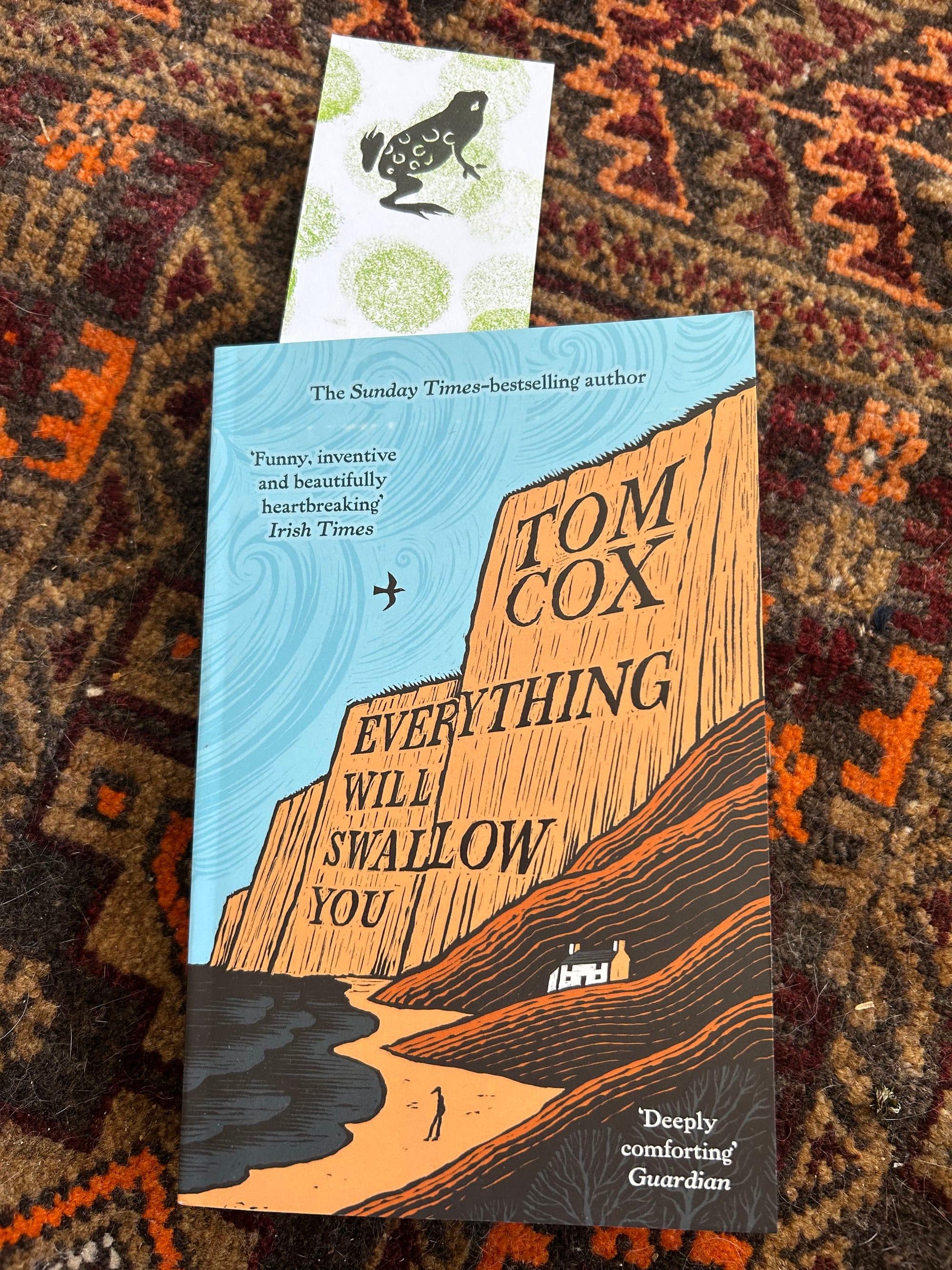
You can order the paperback of my latest novel Everything Will Swallow You here from Blackwell's with free international delivery. You can pre-order my upcoming short story collection for next month direct from the publisher here.
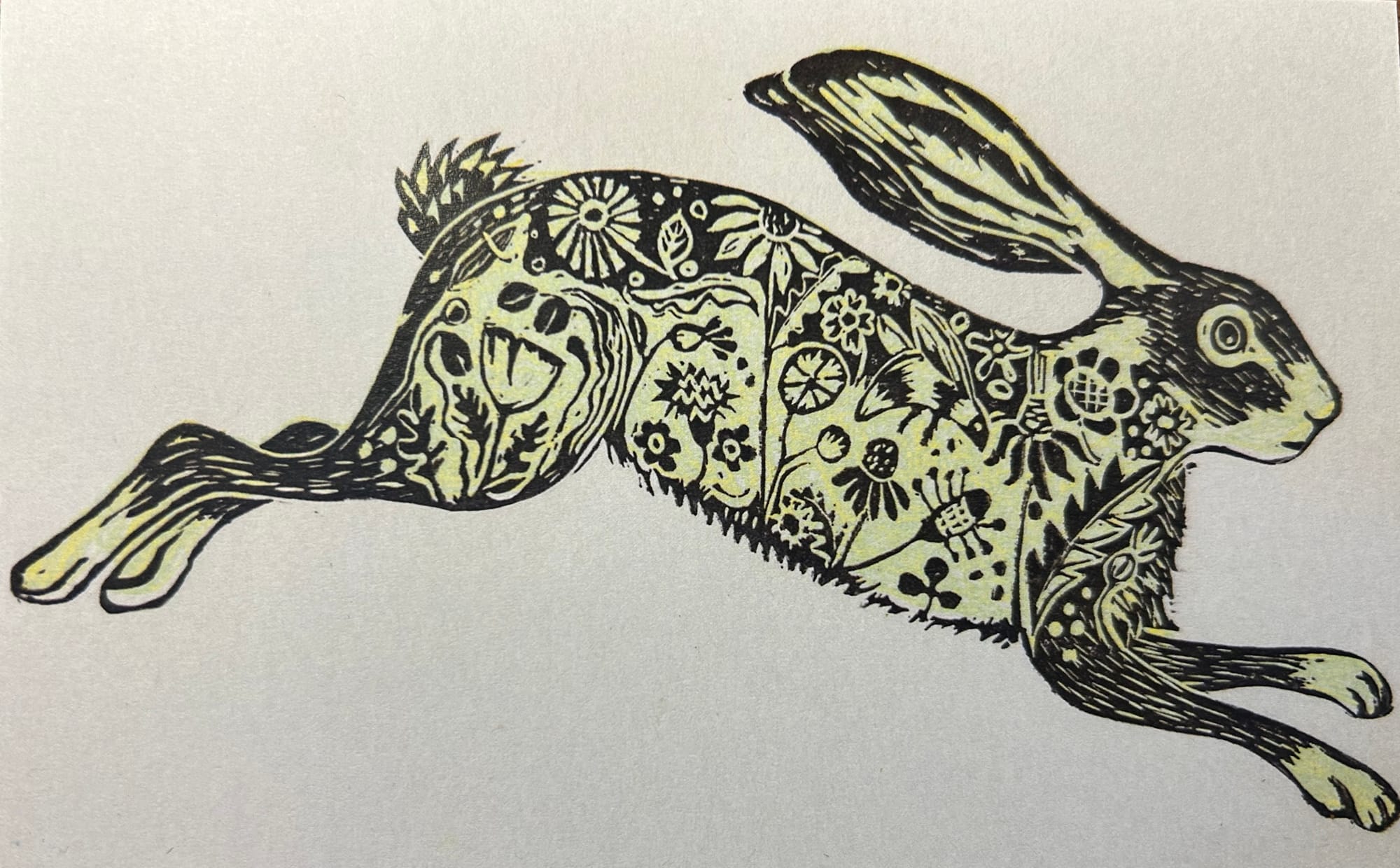
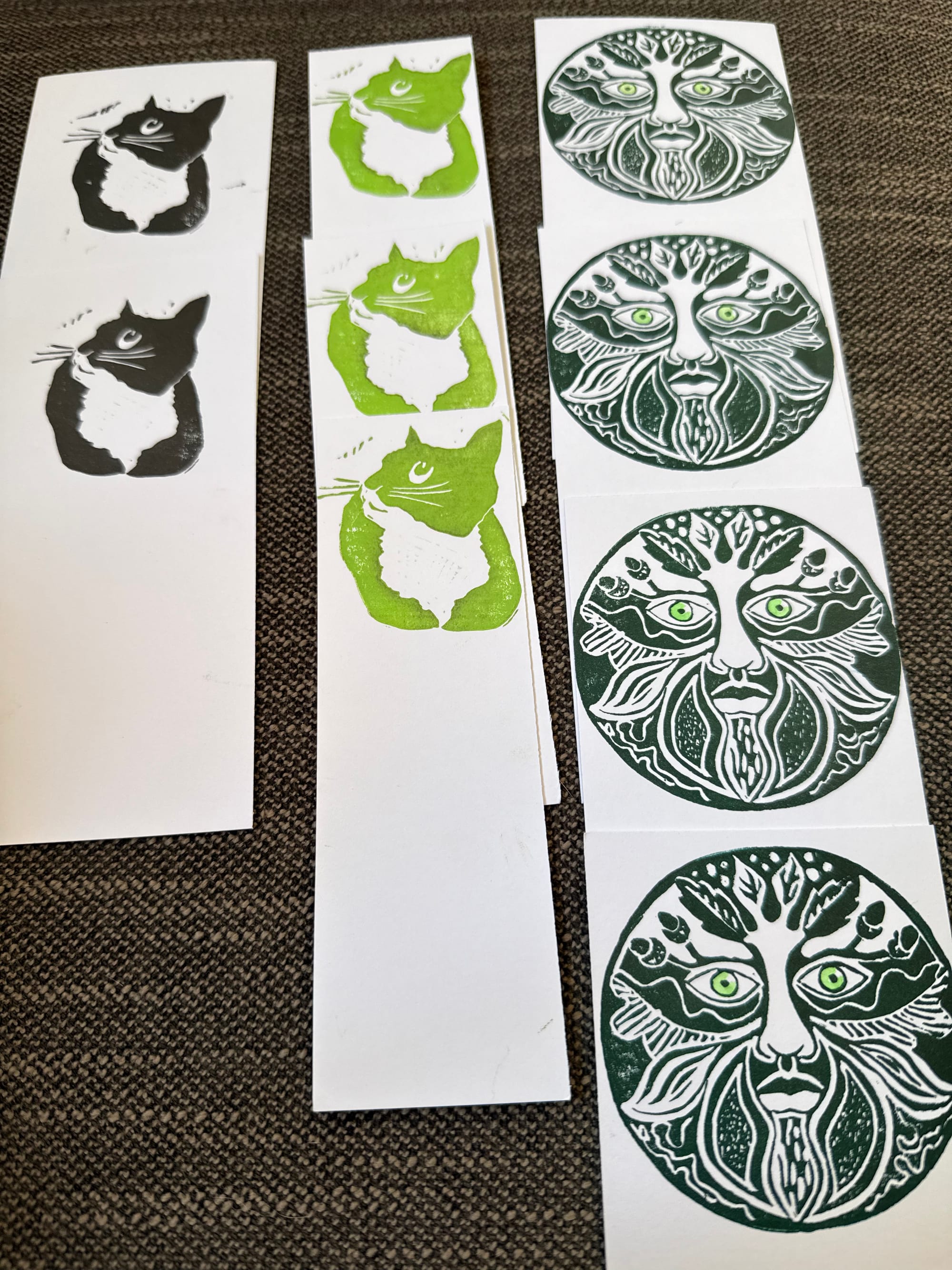
If you're in the UK, I have a few signed copies of Everything Will Swallow You here, which I can sell direct, along with a small piece of original art by my mum (see below), while stocks last. If you'd like to take advantage of this offer, please email your address to hello@tom-cox.com and I'll let you know how to pay.
Huge thanks to the Landmark trust for allowing me to stay at Clytha Castle. You can book your own break at Clytha here.