Old Litkinov

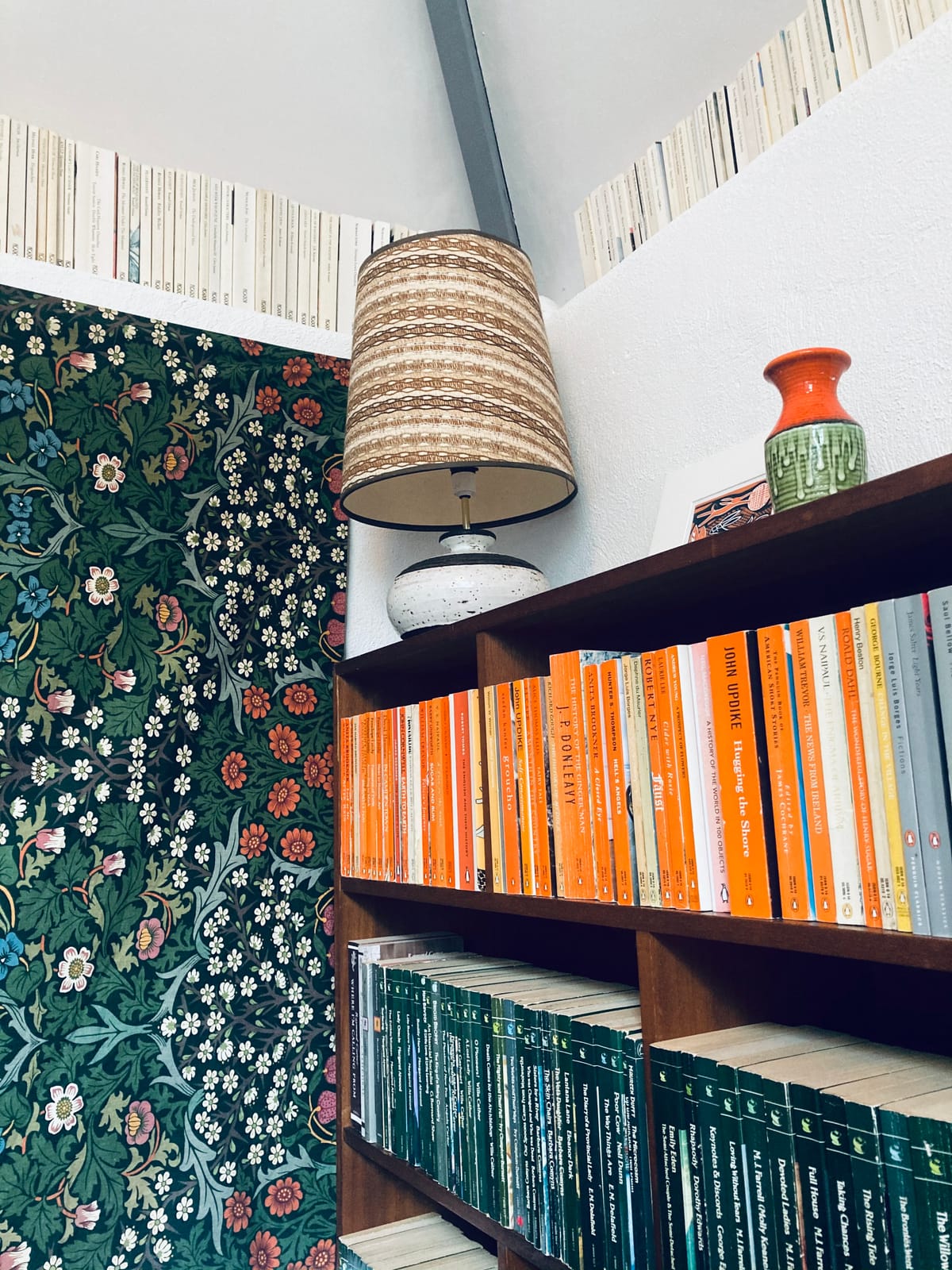
Old Litkinov owned the bookshop down the road and, back when I was a poor student, I would sometimes sell him books that I had stolen from delivery trucks, supermarkets and the bedrooms of people who’d verbally undermined me. Ever perceptive, Litkinov surely knew what was going on and when I arrived with my weekly rucksack full of paperbacks he never questioned my sources. An eccentric character, misunderstood by many, he was the natural ally of those trying to screw the system and carve out a living on the margins of society. The shop had been there since before forever and I heard from acquaintances that there had been other, even older Litkinovs in charge of it prior to Old Litkinov. On the loftiest of the building’s four storeys was a storage room with a sagging floor and two old triple-decker beds, which the latest Old Litkinov had generously opened as a bunkhouse for passing bohemians and bookworms in the grip of penury. Always he would put a crucial opening question to his potential lodgers: “Do you write poetry?” If the answer was yes, they were turned away without mercy.
The neighbourhood was a hotbed of poets in those days and, although my antipathy to verse was nothing like as prickly as Litkinov’s, I have to admit that I found most of these individuals grating, arrogant and pretentious. All the poets were constantly hosting workshops which made much more money than their actual poetry, and this only led to even more poets hosting even more workshops to support their even more unsuccessful poetry, and the character of the city was visibly taking a turn for the worse as a result. In a characteristically counterintuitive gesture, Litkinov would often keep the shop open late into the evening to host open mic poetry nights. These he would usually sabotage by setting fire to his hair with a candle or playing Bartok’s Concerto for Orchestra at such a volume that no other sound could be heard.
“There’s a position opened up, and I wondered if it might be of some interest to you,” said Old Litkinov after I’d been visiting the shop for six months or so. As he spoke, he did not lift his eyes from the thick Algerian novel he was reading. “It’s not a lot, maybe twenty hours a week, and the pay’s nothing to send a postcard home about.” The previous week I’d dropped out of university after being accused of placing savoy cabbages upon the royal lecture theatre’s seats prior to the visit of a celebrated neuroscientist, and now it was December, the month of daytime nights where you feel like the dark is closing in on you from both ends of the tunnel, and you fear, counter to what experience has told you, that the days will never again expand. I remember, as Litkinov spoke, there was a street lamp flickering directly outside and, watching it, I was struck by the sensation that I was looking at my life’s one final faltering spark of electricity.
“Sign me up,” I told him.
I had never seen anyone else working in the shop with Old Litkinov and my assumption was that the truth was less that a position had “opened up” and more that he had taken pity on me. I had a dim view of myself back then – a thief, girlfriendless, excommunicated from my own family – but also possessed a strange, deep inner confidence that I would one day do something hugely important with my life: more important certainly than working in a moderately successful secondhand bookshop. However, the years ticked by, my hours and responsibilities increased, and I realised, to my surprise, that I was not the unhappy young cloud of a man I had once been. I was rarely rushed off my feet, had plenty of time for reading, and the bookshop provided a refuge from the increasingly cacophonous outside world, if you ignored the times I heard Litkinov on the front desk, berating a customer for purchasing a collection of writing by Ted Hughes, Carol Ann Duffy or Philip Larkin. The space I rented at the top of the shop –Litkinov’s former lodgings for itinerant bohemians, before too many poets tried to finagle their way in – was not large but it was comfortable, and I had been permitted to decorate it, without censorship from my landlord-slash-employer. The only thing it lacked was perhaps a few extra books, but I could find plenty of those downstairs.
As time went on, and I became entrusted with handling more important parts of the shop’s infrastructure – for example, Litkinov, who despised every bank or building society employee he had ever met, left me to count the day’s takings, subtract from them what was needed for that week’s groceries then place the remainder under a loose floorboard in the Literary Criticism section – I obviously sometimes thought about Litkinov’s advanced age and how that related to the future of the business. His birthdays went by: 91, 98, 105, 112, 119 (Litkinov preferred to age in sevens), but he continued, undaunted, his mind as sharp as ever. He never spoke of any living relatives and I was aware of his growing affection for me, especially via the way he would sometimes grasp my chin in both hands and pass on homespun wisdom such as “A good table is worth three bad chairs” or “Drink six beers a day but never a drop more and your life will never be a dry or flooded river”.
I didn’t want to make assumptions, but I knew how important the shop was to him, and how much he’d hate it to fall into the hands of a property developer or chain burrito outlet. Meanwhile, I wasn’t getting any younger myself, and had no family inheritance, savings or pension to fall back on. Spending your days with a person significantly older than you can give you an unrealistic sense of your own youth, hence it was with surprise that, around the time of Litkinov’s 126th birthday, I looked into the mirror of the bathroom we shared and realised that my hair was completely grey. Litkinov’s, meanwhile, was now extraordinarily thin, consisting of no more than seven or eight strands in total. This had sapped some of the drama from the poetry readings he disrupted by setting fire to it.
Around that time a surprising development occurred: Litkinov took a wife, by the name of Issy. He told me he’d met her in the town marketplace while queuing at the Polish stall for the final cured sausage of the day, the future care of which Litkinov chivalrously conceded to Issy. My initial reaction was that the pair were a curious match, due to the 106-year age difference and, perhaps more pointedly, because of the stark contrast between Litkinov’s interest in 18th-century French history and Issy’s interest in lip filler. But I am not one to judge and could not deny there was something deeply touching about witnessing Litkinov lecturing Issy, say, about how the lavish spending of Marie Antoinette had contributed to the French financial crisis of the 1770s, and Issy replying, “Llll-ove that for her. Hashtaggirlboss.”
Litkinov was still the same man in many ways: he continued to smell like an attractive European city and eat bananas in the same apprehensive way he always had, but there was a noticeable new weightlessness to him, too. Soon, the happy couple were introducing one another to their respective families: Litkinov making a rare trip out to the suburbs to enjoy a roast with Issy’s parents and then showing Issy a photograph of his own mother dressed up for an important social occasion during the 1920s, to which Issy replied with emphatic approval, “Oh, for REAL. Skinny queen.” I had never seen Litkinov even close to being in love before and, even though I missed having him all to myself, it was impossible to begrudge the couple their happiness. So when, only a month after their honeymoon, Litkinov announced that he would be leaving the bookshop to start a new business with his bride, I wished him only the best.
“So… a nail salon,” I said. “That sounds like… fun.”
“Nail salon and fitness tattoo spa, I think you’ll find,” said Issy. “ I was like ‘Chat should we like seriously do this?’ and Chat were like ‘Slay’.”
“Of course, this also means that the bookshop will need a new owner,” said Litkinov. “And I think I know just the individual.”
“I guess you’re talking about Adam from the flats over on Shepherd Avenue,” I said. “He’s been looking so down and adrift since he lost his job as deputy manager of Waterstones.”
“No, I’m talking about you, you gold-standard nincompoop. It’s all yours.”
So that’s how it happened, the way I became, through no real ambition or special ability of my own, the manager of a secondhand bookshop. To be honest, little fundamentally altered after I took over. What was especially peculiar about this ambience of immutability was that when customers came in, they did not seem to notice the change of management. “Good morning, Litkinov, my man,” they would say to me. “Do you have anything by Angela Carter with a burgundy cover?” or “I’m looking for another book on 13th-century Spanish moths that’s just as informative as the one you sold me last year.” I decided it was too much hassle to correct them. And when I catch sight of my reflection, I can see the root of their mistake: perhaps all those years with my mentor rubbed off on me in a physical way, as well as a psychic one. The sign above the door is still the same: it says ‘Litkinov Used Books’, just as it has done forever. What would be the point of replacing it? That would only serve to confuse valued customers. I think the world changes so fast nowadays, some people just want a solid rock they can cling to, as the sea rages all around them. My job has become to maintain that rock, and I suspect I will end my days contentedly doing just that.
I never did see the real Litkinov again. But one day, a couple of months into my life as bookshop owner, feeling a tiny bit lonely, I went to visit him at the address he’d given me for his new business venture. When I got there it was just fields, as far as the eye could see. I don’t know what happened but I trust that, wherever he is, he is getting by just fine. In fact, when I stare in the mirror at night, into the face that was once his, I can go further than that: I can say, categorically, that I know it.
If you enjoyed this, I'd be delighted if you pre-ordered my new collection of short stories - and assisted with its printing costs - here.