The Hagstone
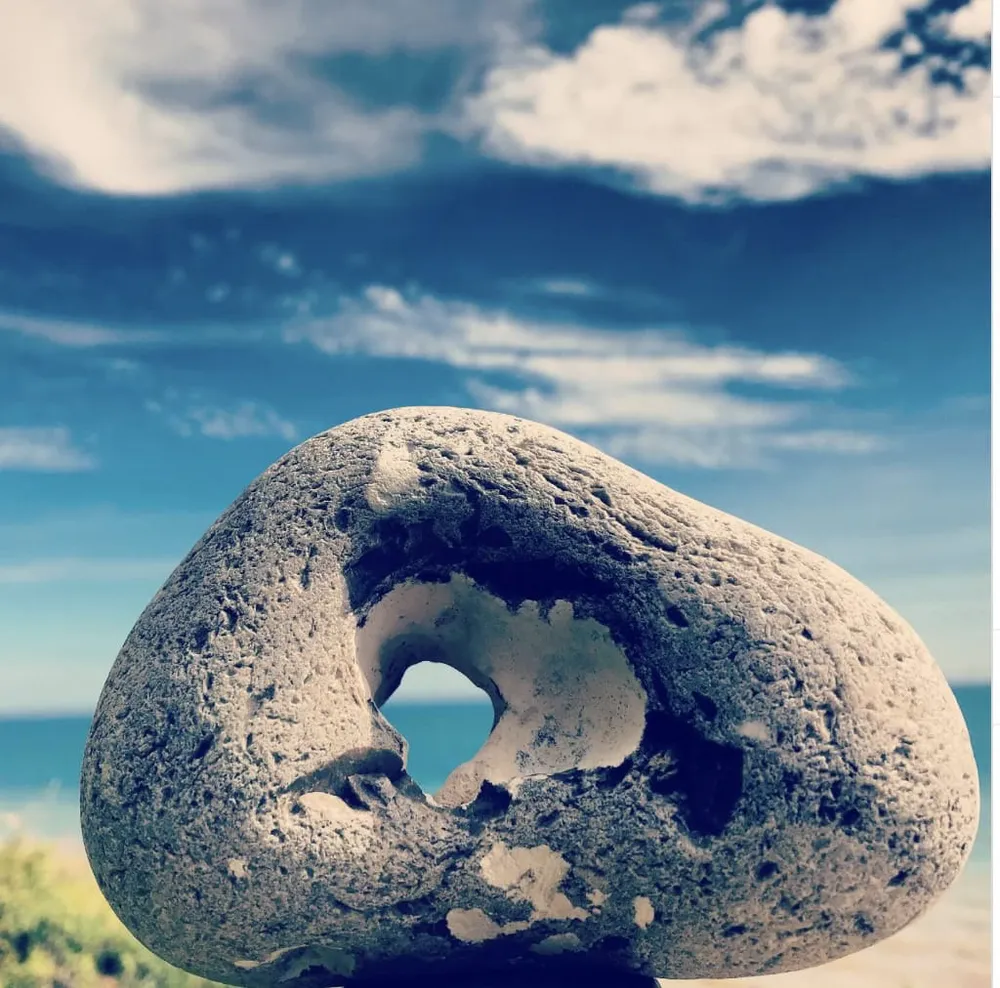
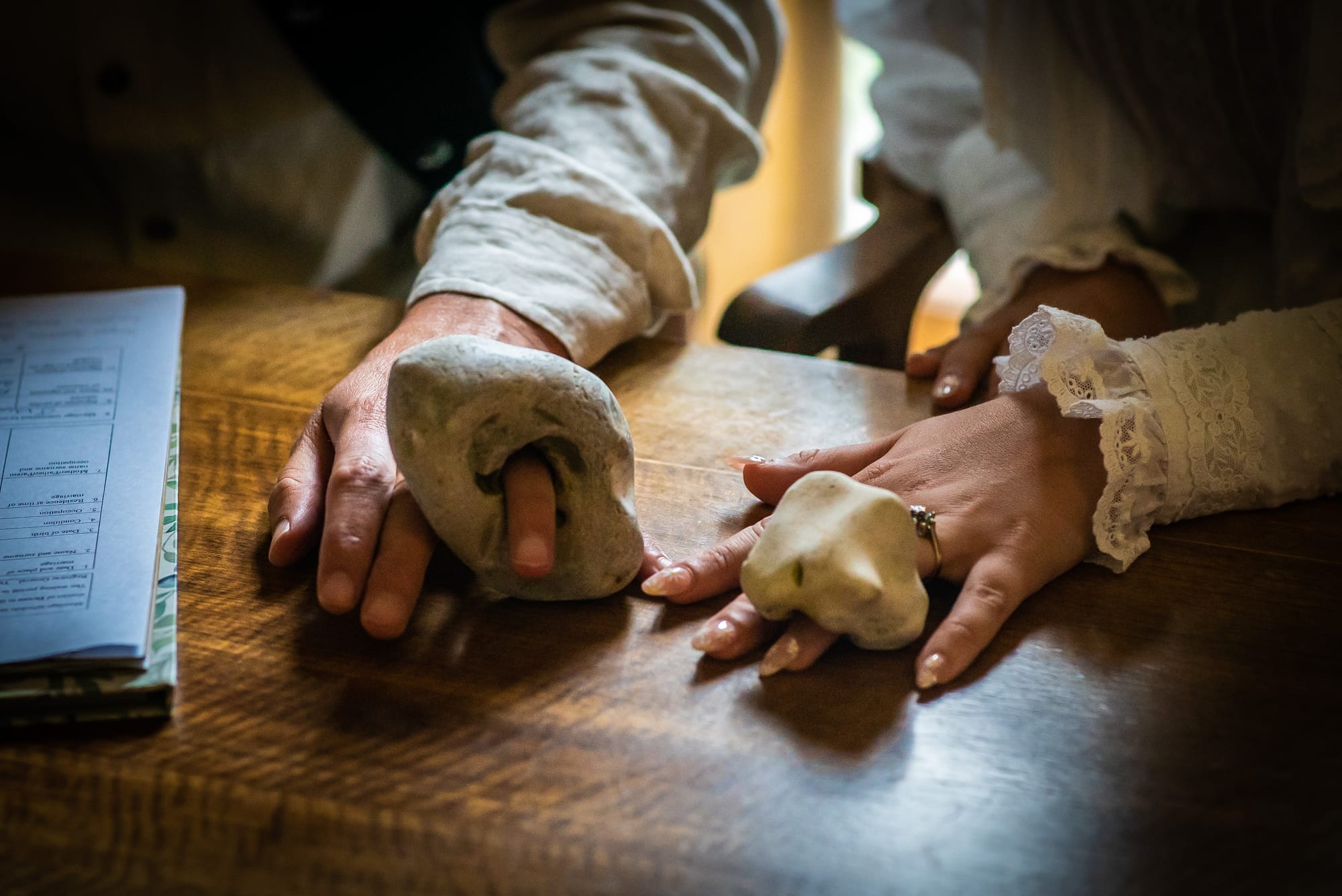
I collect hagstones. Doesn't everybody? There are around 30 of them sitting on our garden wall, mostly found on beaches in East Devon and Dorset, not all as large and impressive as the one pictured above but each one beautiful in its own way. A geologist recently talked me through the exact way these amazing stones form and I instantly forgot all of it but I know it was fascinating. Are they as oracular as some people say? I have no evidence of that. But they're very attractive and, when we got married, my wife Ellie and I decided it would be fun to exchange a couple of the bigger ones from our collection, instead of rings.
"It's certainly not something we've seen before, but that's fine," said the registrar, clearly concerned that she might say something that would offend whatever strange religion we subscribed to...
The truth is, of course, we haven't got a religion. We just really like rocks.
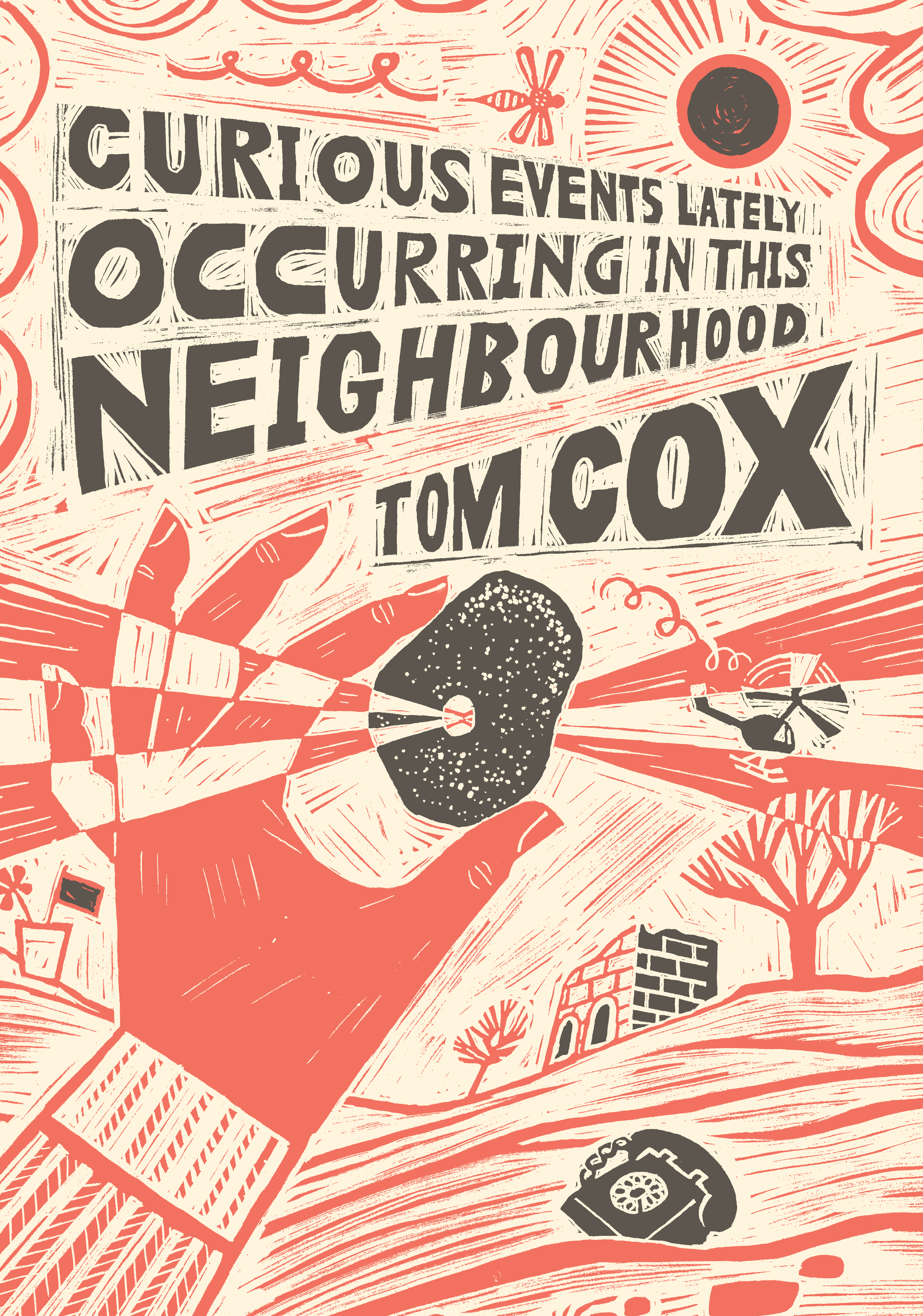
This time last year I woke up one morning, a week or so before our Big Day, with the thought "It's way past time I wrote some fiction about a hagstone" in my head. I'm posting the story that thought led to here, unpaywalled, for new subscribers and those of you who weren't able to read it when it was first published. If you enjoy it you might also enjoy the rest of my upcoming short story collection Curious Events Lately Occurring In This Neighbourhood, which I'm publishing in a DIY fashion as a limited edition in collaboration with the Breakthrough Books Collective. You can order the book here (with a signature, if you choose) and assist with printing and editing costs in the process...
THE HAGSTONE
It’s the fifth day of stifling heat in succession, Mandy says she’s tired of the beach and what she calls “the feeling of saltwater seeping into my inner workings” so instead we go to the supermarket to cool down. We opt for Sainsbury’s because its cool aisle is set at a dependably lower temperature than those of rival supermarkets. While approximately parallel to the hummus and antipasti we run into Louise and Louis.
“Oh my God, what the hell are you guys doing here?” we chime.
“We came here to cool down,” they chime. “We don’t even need any food!”
“Same!” we chorus.
Soon we are chatting about what feels like every topic under the ferocious sun, while genuine customers reach awkwardly around us to grab artichokes, Kalamata olives and the new thistle-flavoured tahini that Sainsbury’s, clearly strapped for ideas, have rolled out for the summer. It goes well, or at least significantly better than last time the four of us got together, when I drank too much and called Louise “Louis” and Louis “Louise” by mistake. Louis suggests that a fun activity might be to go off in different pairs for the remainder of the day. From a trouser pocket he produces an intricately folded piece of paper which, curiously, has our names pre-written on it: one for each of its four compartments. He twists this contraption, which he calls a “Fortune Teller”, in his hands, pulling the face of a confident Edwardian magician, and it is subsequently decided by the Fortune Teller, and by Louis, that I will spend the afternoon with Louise and he will spend the afternoon with Mandy.
In the car park, Louise tells me she knows an oxbow in the river where the current slows and the water deepens, which is just perfect for diving and swimming.
“Unfortunately,” she adds, “it’s 1,197 miles away on the Austria-Slovenia border.”
But she says she knows another one, about forty minutes’ drive from here, which, due to its altitude and general emotional disposition, is cool and refreshing even on the hottest of days. As I steer, she sits in the passenger seat and fiddles with a smooth pebble, about the size of her hand. I notice that its centre has been eroded by the sea into an almost perfect circle. “What’s that?” I ask her.
“It’s a hagstone,” she tells me. “They’re historically associated with witches. Some people say that if you stare through them you can see a living being’s true form. I’m one of the some people who say that. Hey, let me check you out.”
She raises the stone to her left eye, like some wonderful old cave banshee with a prehistoric magnifying glass, and peers at me. Unnerved, I veer marginally off the road, almost mowing down Mr Willerclough, who once tried and failed to guide me smoothly through my Applied Xenophobia GCSE to a grade of C or above, and is now older and out for one of what will turn out to be the last fifty-four walks of his life.
“No, we’re all good,” says Louise. “You’re just Robert.”
“I’m glad,” I say. “To be perfectly honest, I’ve never felt like much else aside from a Robert.”
“I tried it on our cat last week,” says Louise. “When I looked at her through the stone she yelled at me and became the leader of a Saxon tribe.”
“Were there any telltale signs that made you think the tribe was specifically Saxon?”
But Louise, already tiring of this line of conversation, is busy examining her hands. “I’ve always had small hands and tiny fingers and thumbs,” she says. “Hamsters love it because when I hold them it makes them feel like they’re taking a brief holiday in the more swashbuckling persona of rats. Once at art school everyone was asked to do a charcoal drawing of their own hands and when the teacher came over to look at my drawing he said, ‘I think you’ve got the proportions a bit wrong there.’ Then he looked at my actual hands and said, ‘No, in fact, you’ve got it just right. Excellent work. Carry on!’”

The walk from the car to the river is a slow one, mostly because every time we see a bird or someone’s dog, Louise insists on stopping to look at them through the hagstone to find out if they are bullshitting about being birds and dogs. I find myself wondering about Mandy and Louis and hoping they are having just as pleasant an afternoon as we are. When we arrive at the oxbow, it’s wholly idyllic and mercifully empty of loud irritating teenagers, unlike most such places at this time of year, but we discover we have neglected to pack our swimming costumes. Instead we swim in our clothes: Louise in her goth jumpsuit, clogs and straw hat, and me in the old drainpipe jeans and Sigue Sigue Sputnik tour hoodie that I wear just to spite those cynics who persist in claiming neither garment suits me. Our progress is not what you might call dynamic but after two hours of front crawl we reach the waterfall fifteen yards away. We feel anointed by its spray and we laugh, coming to the realisation that we are laughing at nothing but being there and alive, then laughing all the more for the idiocy of that realisation.
“It’s hard to even imagine winter on a morning like this, isn’t it?” says Louise. It’s 6.21pm, but, being ideologically against cruelty, I refrain from correcting her.
After our drive home, she insists on giving me the hagstone as a gift to remember our day by. I say goodbye, and, upon reaching my front garden, immediately use the hagstone to scrutinise next door’s tortoise, who to me has always seemed somewhat shifty. The tortoise instantly seems different. Still a tortoise. But marginally more green.
“Wow,” I think. “Maybe this thing does actually work.”
Mandy arrives home about two hours later and discovers me in the kitchen on my laptop, using the ‘street view’ function on a house listing on RightMove to take a discursive tour of the lanes of rural Shropshire. By the time she arrives I have already travelled from Shrewsbury to Ludlow, taking picturesque detours through the villages of Pulverbatch, Hope Bowdler and Wall Under Heywood. I’m on the tantalising cusp of seeing Ashford Carbonel for the first time when she tells me she has an important announcement to make.
She says she is head over heels in love with Louis and the two of them are going to live in the Scottish Highlands together.
This doesn’t come as of much of a surprise as it might. I’d always suspected she was lying when she said she found grouse moors abhorrent, and there’d been a lingering question about her and Louis in my mind for a while, particularly since last year when, during the party to celebrate my promotion in the history faculty of the university where we all work, he stopped the music and, to her obvious pleasure, took both of her breasts out of her dress and drew smiley faces on them. She starts to talk about “new starts”, feeling that she has “outgrown the whole situation of, like, Us” and other cliches, but I’m not fully listening because by this time I have picked up the hagstone and am looking through it to discover she’s not a human woman at all, but a deluxe American fridge. I’m no expert but I’m going to guess probably the kind that carries a price tag of over £2,000. She even has two ridiculous extra drawers just for the storage of pizzas, and one of those fancy ice makers on the side. I notice the ice maker boasts of something called ‘no-frost technology’.
I surprise myself by being fine with the Louis stuff, even when Mandy confesses she has been sleeping with him for the last fifteen months: at least she’s come clean, instead of continuing to operate behind my back, stringing the situation out and making it worse for everyone.
The fridge situation is harder to stomach. Six years: it seems a long time not to notice, even as the unobservant person I am. “How could you?” I ask. “I distinctly remember you claiming you were struggling to cool down this morning, before we went to the supermarket in an attempt to rectify that, and now it transpires your claim was patently untrue.”
She says nothing, just takes her stuff and leaves. “So much for no-frost technology!” I want to shout as she walks out the door, but refrain, since I am at root a bigger person than that. In time, I get over it, and find much about being alone soothing, including the realisation that the industrial rattling noise I used to hear in the middle of the night was not a ghost, like I’d thought, but merely Mandy efficiently refreshing her ice compartment. As for the hagstone, I still have it, and put it to use frequently. It’s shown me some surprising things, some dark things and some strange things (finding out that my postman was not a postman at all but actually another hagstone was a notable highlight). But I am reassured to consistently discover that lies and subterfuge are in the minority and most living beings in our topsy-turvy world are in fact broadly what they purport to be.
Read another sample story from the book.